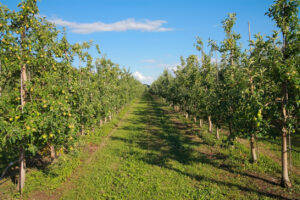


Theapricot tree belongs to the rosaceae family and is widespread in Italy, in regions with a mild climate. Although this plant is hardy, it is potentially vulnerable to several diseases and insects, which are important to recognize in order to protect your crops.
This article will describe the diseases and pests that can affect apricot trees and some methods to combat them.
Ideal conditions for growing apricot trees.
Growing the apricot tree requires a temperate climate free of late frosts, and planting should be done in the fall or at the end of the winter season. In addition, the best location for this plant is sunny and sheltered from cold currents, where there is deep, medium-textured soil rich in organic matter.
Some preventive measures
In addition to knowing the best conditions for apricot trees, some preventive measures can be followed:
- Managing pruning rationally.
- Water only the foliage.
- Carry out balanced fertilizations.
- Use preventive treatments with strengthening action.
- In case of disease, remove the infected parts of the plant, preventing it from spreading.
Although these precautions will help prevent possible diseases, it is good to know the most common ones so as to manage them. In fact, it is not uncommon that due to adverse environmental conditions, fungi or pests attack the apricot tree, impairing its flowering and fruit production.
How Plantvoice helps protect apricot plants
When talking about prevention and the right care for plant health, it is good to mention the innovation brought to agriculture by Plantvoice. Using this technology, it is possible to know the health status of the plant in real time, thanks to detailed monitoring. Plantvoice is able to analyze the plant’s sap so that the plant can be given the resources it needs.
Through a plant-friendly device inserted directly into the stem of the plant, it monitors its condition and sends the collected data to an artificial intelligence software, which can:
- Understand whether the plant is under water stress, optimizing irrigation.
- Observe the plant’s reaction to the chosen treatments.
This allows the condition of apricot plantations to be analyzed through diagnostics, enabling the best decisions to be made for maintaining the health of the trees.
The main fugal diseases of apricot trees.
Fugin diseases are particularly threatening to apricot trees and can cause the death of the plant if not recognized and treated properly.
Let’s find out together what they are.
Monilia
Monilia is one of the most damaging fungi for apricot trees, as it weakens fruit and blossoms and, in severe cases, even production-bearing branches, compromising the plant’s yield. this disease is favored by humid and foggy climates, with temperatures as low as those in early spring.
There are two species of this fungus:
- Monilinia laxa: striking at low temperatures.
- Monilia fructigena: which attacks the plant in higher temperatures.
Specifically, it causes rot over the entire surface of the fruit, leading to dehydration and mummification. It can be recognized by the formation of small indentations, which cause the fruit to rot and become covered with mold.
When the symptoms of this infection are recognized, it is important to take action immediately, before it increases and leads to the death of the apricot tree. Preventing this infection is very complicated, and to combat it you can to remove infected fruit and branches and burn them. Then biological fungicides can be applied to the wounds.
In addition, it can be treated with calcium polysulfide products, through the microorganism Bacillus subtillis, with specific fungicides or c products that provide organ protection against monilla attacks.
Powdery mildew
In this context it is worth mentioning white blight, also called powdery mildew, a fungus that appears on leaves and shoots in late spring. It can be recognized by the light-colored spots, on which a whitish mold forms, near which the tissues necrotize, taking on a brownish color. Infections with this fungus appear from early in the season, when the shoots hatch and are favored by warm temperatures.
The main methods that can be used to combat powdery mildew are sodium or potassium bicarbonate, to be diluted with water. In addition, sulfur products, Cuban zeolite and other corroborants can be used to treat the disease.
Corineo
Another fungus that affects the apricot tree is coryneus, also known as pitting poultice or parasitic gummosis. In case it affects one’s own plant, it can be detected by several reasons:
- The leaves have reddish-purple indentations surrounded by a halo, which detach from the plant, leaving the lamina pitted.
- The branches have slits from which a gummy exudate exudes.
- Small red spots form on the fruit, which become gummy encrustations.
To manage coryneal development, prevention is the first step. Examples of preventive measures that can be used are: the use of resistant varieties, planting with not too dense planting beds, and targeted irrigation management.
In addition to this, it is advisable to carry out winter treatments with copper products, to be used after the leaves have fallen. Also in winter, you can protect the tree by applying a trunk paste, which helps clean the bark of fungus.
Red spotting
The last fugal disease we will discuss is red spotting, so called because it causes reddish spots and defoliation. This fungus occurs in mid-April, infecting young shoots.
Prevention is also crucial here. After helping the plant strengthen its natural defense mechanisms, it is important to treat leaf fall with copper-based products.
Pests of the apricot tree.
In addition to fugal infections, apricot trees are vulnerable to various insects and pests, which can compromise the health of the tree to the point of stopping fruit production.
In this guide we will explore the main diseases of apricot trees caused by insects.
Aphids
The most common and harmful pests of the apricot tree are aphids: small insects that, depending on the species, can be whitish, green or black in color, which suck sap from the plant. They arrange themselves on the underside of the leaves and produce a substance called honeydew, which causes the plant to asphyxiate, form fumes and burn, due to the lens effect with the sun’s rays. As a result, the leaves become deformed and fall off.
Due to the insect’s trophic action, the plant weakens and its photosynthetic activity also decreases. To prevent an aphid infestation, it is recommended:
- Carefully observe the plants and monitor them, examining them leaf by leaf.
- Grow dandelion and marigold among the apricot trees, flowers that attract ladybugs, which feed on aphids.
- Fertilize regularly, avoiding excess nitrogen.
- Dilute nettle extracts in water.
- Use neem oil, a natural product with repellent effect.
If, on the other hand, the infestation is already in progress, it is possible to protect the apricot tree by using insecticides with active ingredients to attack the aphids directly.
Mealybugs
Mealybugs that attack apricot trees are several phytophagous insects belonging to the order Hemiptera and the superfamily Coccoidea, known for their stinging-sucking mouthparts. These pests fixate on branches, leaves and fruits, feeding on the sap and causing plant weakening, leaf yellowing, drooping and, in severe cases, general decay. In addition, their activity promotes the development of fumigants because of the sugary honeydew they secrete.
Among the most common species are the
Aspidiotus perniciosus
, known as San Jose mealybug, represents one of the most damaging. It is recognized by its grayish circular scutum with a darker central spot and preferentially colonizes branches and fruits, resulting in necrotic areas and discoloration that render the fruits unsalvageable. Also the
Pseudaulacaspis pentagona
, or peach white mealybug, can infest apricot trees, forming whitish colonies in the form of small overlapping scuds that cover the trunk and branches, causing desiccation of affected parts.
Another frequent species is
Planococcus citri
, known as the cottony mealybug, which is distinguished by its oval body covered with white waxy filamentous secretions. This mealybug prefers young shoots and fruits, on which it produces abundant honeydew that favors the establishment of saprophytic fungi. L’
Eulecanium persicae
, belonging to the soft scudetto mealybugs, occurs as small brownish pads and is mainly localized on branches, where it weakens the plant and produces much honeydew.
Attack by these mealybugs is favored by dense canopies, poor aeration, and conditions of water or nutritional stress. Their presence, if unchecked, progressively compromises apricot tree health and production quality.
To prevent mealybug attack, the same methods described for aphids can be used, with the addition of soft soap.
Mites
Apricot trees can be attacked by several phytophagous mites, but the most common and harmful is the red spider mite, scientifically known as
Tetranychus urticae
.
This mite is very polyphagous and thrives mainly in hot, dry conditions. Females and juvenile forms feed by stinging leaf cells and sucking their contents, causing the appearance of small chlorotic spots that, with intense infestations, converge to result in widespread yellowing, desiccation and premature leaf drop. Thin silky webs can be seen on the lower pages of infested leaves, within which the mites live and reproduce.
In addition to the red spider mite, the yellow mite (
Eotetranychus carpini
var. vitis), less frequent but also capable of causing yellowing and vegetative weakening, and the bud eriophid mite (
Acalitus phloeocoptes
), which attacks buds causing deformation and reduced fruiting.
Infestations, if not contained, can compromise both the quality and quantity of apricot production.
Some products to combat this pest are propolis, soft soap, rock powder, and neem oil.
Anarsia lineatella
Theanarsia, also called peach moth, is a nocturnal, gray-winged moth with brown spots. It usually lays its eggs on leaves and flowers, which hatch giving birth to caterpillars that feed on leaf and fruit tissues, causing considerable damage to the plant.
To prevent anarsia from attacking apricot trees, one can, again, install pheromone traps specialized for this type of insect. Conversely, if there is an ongoing infestation, the plant can be washed with soap and water, or, in more severe cases, insecticides can be used.
PPV: the apricot virus.
Last, Plum Pox Virus (PPT), is a virus that can affect apricot trees, also called Sharka, one of the most serious diseases of this plant. PPT can only be transmitted by insects that act as vectors, and one example is aphids. Symptoms visible on the leaves become evident at the beginning of vegetative recovery and in the summer generally subside until they disappear. Usually small, round or annular chlorotic areas are observed, visible in transparency, along the secondary or tertiary veins of younger leaves.
Damage caused by this virus can also be seen on the fruit. Particularly on nectarines, you can see chlorotic annular spotting with diffuse contours, laid over the entire surface of the fruit, especially toward the calycium hemisphere.
In general, the fruits may appear smaller than normal, with a bumpy, irregular surface due to very marked depressions. At the sunken parts, the mesocarp takes on a reddish-brown coloration, a fibrous texture and may show gum deposits. In particularly susceptible varieties, early fruit drop is observed, occurring 2-3 weeks before harvest. In more virus-resistant varieties, however, the fruits appear normal. However, those that manage to ripen on the plant are of inferior quality.
Finally, symptoms are also observed in the kernel, which shows yellowish annular areas with well-defined margins. Such symptoms are of high diagnostic value.
There is no cure for this virosis. The only remedy is the culling and destruction of all infected specimens, as provided in Italy by the Lotta Obbligatoria (Ministerial Decree of November 29, 1996). In addition to this, it is advisable to take precautions against vector insects, such as cleaning the orchard and pruning the plants.
Want to monitor the health of your crops in real time? Discover Plantvoice!