Spotted wing drosophila (Drosophila suzukii) is a 2 to 3 mm vinegar fly that, unlike its native relatives, lays eggs in healthy fruit that is still ripening on the plant. No single measure stops it. What works together is fine-mesh netting closed before the fruit changes colour, traps that tell you when the fly has arrived, fast removal of infested fruit, and sprays aimed at adults only when monitoring justifies them. The parasitoid releases under way in Italy since 2021 are a long-term help, not a treatment.
It was first caught in Italy in 2008, in traps in Tuscany, and the first damage was reported in Trentino in 2009. Today it is present across the country, according to the Lazio plant health service, and it breeds from spring to late autumn because it moves from wild to cultivated fruit as each ripens.
How to recognise spotted wing drosophila
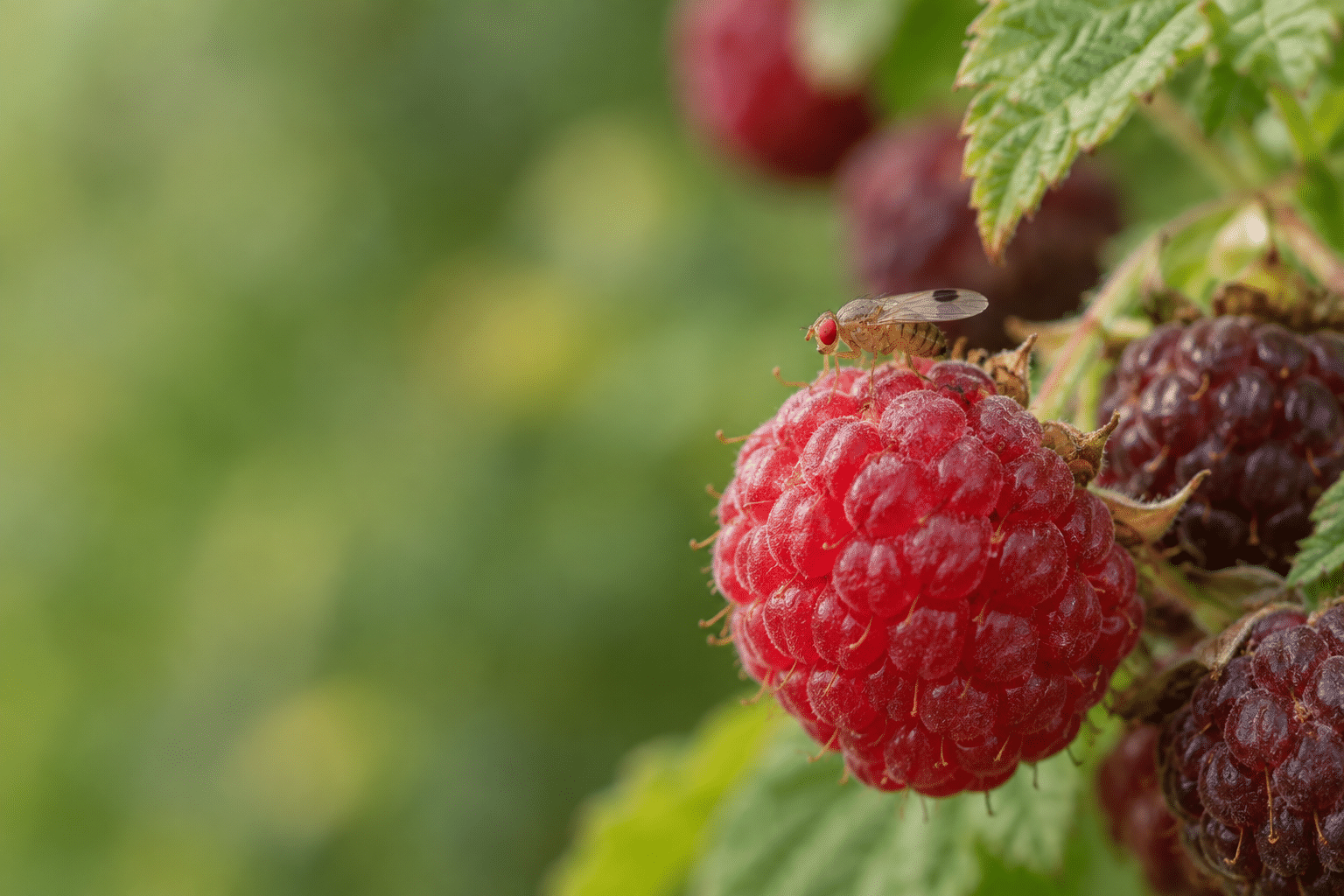
The adult is 2 to 3 mm long, with red eyes, a yellow-brown thorax and black stripes on the abdomen. Males are easy to spot: they carry a dark patch near the tip of each wing, which gives the fly its English name, and two small combs of dark bristles on the front legs. Females have clear wings. What marks them out is a strong, serrated ovipositor that cuts the skin of healthy fruit.
Eggs are almost invisible, but two thin breathing filaments stick out of the skin. Larvae are white, legless and 3 to 4 mm long when mature. They pupate inside the fruit, or sometimes next to it. The common vinegar fly, Drosophila melanogaster, only uses fruit that is already rotting or damaged. Larvae in fruit that looked sound a few days earlier point to D. suzukii.
Which fruit spotted wing drosophila attacks
In Italy the economic damage falls mainly on soft fruit and cherry:
- Main damage in Italy: blueberry, raspberry, blackberry, strawberry and cherry.
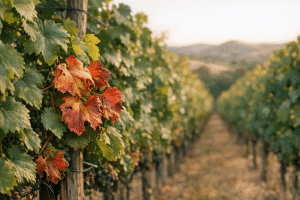
- Occasional damage: peach, plum, apricot, kiwifruit, persimmon, fig and grape. On grape it shows up as sour rot on thin-skinned varieties or on wine grapes picked late.
- Only over-ripe or damaged fruit: apple, pear and tomato.
Wild plants such as elder, honeysuckle, dogwood and wild blackberry keep the fly going between crops, so the margins around your plot matter. On grape, the first reports from north-east Italy named varieties such as Schiava and Traminer.
What the damage looks like, and why you see it late
At first there is nothing to see except, under a stereo microscope, the egg filaments. Two to three days after egg laying, a soft, slightly sunken patch forms where the larvae feed. Then the flesh collapses, and fungi and bacteria enter through the wounds. Raspberries, strawberries and blackberries turn soft and rot. Blueberries shrivel without showing mould on the outside.
The late discovery is the real cost. Fruit with eggs or young larvae passes the sorting line and is picked as if sound. The larvae keep growing after harvest, so the damage appears at the market. A female lays about 400 eggs in her lifetime, usually two or three per fruit, and several females can use the same fruit.
The cycle: why numbers rise so fast
Under Italian conditions the fly can complete 10 to 15 generations a year. A generation takes about 8 days when the average temperature is above 25 °C, 19 days at 18 °C and at least 50 days at 12 °C. The best range is 20 to 25 °C. Above 30 °C male fertility and egg laying drop, and above 32 °C part of the population dies.
| Period | Where the fly is | What you do |
|---|---|---|
| Winter | Females overwinter in reproductive diapause, in shelter around the crop (under leaves and stones, at woodland edges) | Nothing in the crop; plan nets and traps |
| Late winter to spring | Females become active and lay in the first fruit available, including wild fruit | Hang monitoring traps at the edge of woods and hedges |
| Before fruit set | Breeding restarts and continues on wild and cultivated hosts as they ripen | Mass trapping along the perimeter, especially next to hedges and woods |
| Colour change to harvest | Females move into the crop as the fruit starts to colour | Nets closed, traps in the plot, frequent picking, sprays against adults only if monitoring justifies them |
| End of season | Late crops stay exposed until the cold arrives; adults look for shelter | Remove all remaining fruit; check nets and plan next year |
Hot summers slow the fly down. In a monitoring study in the Apennines near Pistoia, high summer temperatures limited the population, and the damage appeared only at the end of the season, on raspberry, blackberry and wild strawberry.
Nets and sanitation: what holds in the field
Exclusion netting is the most reliable method, according to Swiss advisers (FiBL and Agroscope), who recommend a mesh of 0.8 mm. The Tuscan plant health service puts the best opening below 0.8 mm. The edges must be fixed to the ground so wind and vegetation do not open gaps. The weak point is the harvest: workers have to go in and out quickly and close the entrance every time.
A German demonstration project on cherry and berry farms, with meshes from 0.8 to 1.3 mm, found that netting cut fruit infestation. Where monitoring and harvest sanitation were also done, the farms sprayed noticeably less. In combination with foil tunnels, some netted orchards saw more spider mites and caterpillars, and nets also keep out beneficial insects, so keep checking the plants. Netting can complicate pollination, and the cost varies a lot from farm to farm.
Sanitation is the most effective farming measure, says the Tuscan service. Take out infested fruit still on the plant and on the ground. Pick early, often and completely, and do not leave over-ripe fruit where the fly can breed. It is not established whether larvae develop in dried fruit, but adults feed on it, so it goes too.
Infested fruit must be destroyed. Swiss advisers suggest solarisation: seal it in a clear plastic bag, leave it in the sun for 10 to 15 days, then compost it. The Lazio service lists crushing, composting, vacuuming and burying. For picked fruit, the same advisers report that four days at 2 °C destroy most eggs and larvae, so healthy fruit can usually still be sold.
Traps: monitoring first
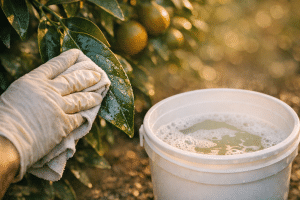
Traps tell you when the fly has arrived and how pressure is changing. A simple trap is a plastic bottle or jar with a lid and holes 3 to 5 mm wide in the upper part. The Swiss recipe is apple cider vinegar and water 1:1 with two drops of dish soap, 2 to 3 cm deep. The Tuscan one is about 200 cc of cider vinegar with a splash of red wine and a drop of dish soap. The Lazio fact sheet gives vinegar, red wine and cane sugar. Red traps work better, according to the Tuscan service.
Hang them in the shade at the edges, check them regularly and replace the bait every two weeks. Do not pour old bait in the plot when you service them. The Lazio sheet sets monitoring traps from late winter at the edge of woods, while the Swiss advisers hang them in the crop at colour change. For mass trapping the Swiss advisers suggest one trap every 10 linear metres, at the edges first and then spread across the plot; the sources present it as one measure among several. To check fruit for larvae, freeze a sample of 100 fruits for a few hours: the larvae leave the fruit and can be counted.
Insecticides: a supporting role
We name categories, not products. Treatments are aimed at adults before they lay eggs (Lazio). Because the fruit is infested shortly before harvest, the effect is mostly a knockdown of adults, and waiting periods before harvest limit when you can spray (Tuscany). Swiss advisers warned that the fly develops resistance quickly and that insecticides alone will not be enough. Italian regional rules also cap the number of sprays per year for each active substance, and the caps differ by crop. Check the current rules of your plant health service and the label before you spray.
Parasitoid releases in Italy
Ganaspis kimorum, called Ganaspis brasiliensis in earlier papers, is a wasp about 1.3 to 1.5 mm long that lays its eggs in the larvae of the fly. It is harmless to people. Italy’s environment ministry authorised the first releases in 2021 under a national biological control plan, using a population from Japan.
In Trentino, after the first releases in 2021, the wasp was recovered at half of the release sites. At least two sites saw it survive the winter and start new generations in spring (EPPO). Five years of results from 20 sites in the province of Trento describe it as a specialist on D. suzukii that does not appear to compete with native parasitoids, has become established in several locations and is slowly spreading. Releases also ran in South Tyrol between 2021 and 2024, and in June 2024 a ministerial decree authorised releases in the Sabina Romana area of Lazio, where cherry growers had suffered heavy losses.
Two things to keep in mind. It is not a treatment: the wasp acts on larvae and its effect builds over years and across a territory, not within a season. And you cannot buy it or release it yourself: releases are run by regional services under the national plan, at chosen and monitored sites. It is the same logic as the samurai wasp against the brown marmorated stink bug, which we cover in Brown marmorated stink bug: damage, defence, samurai wasp.
Where plant monitoring fits
A stem sensor does not count flies and does not diagnose infested fruit: that job belongs to traps and fruit checks. What it tells you is how the plant is doing on water, so when fruit quality drops you can rule water stress in or out before blaming the fly. On reading stress before it shows, we have written about detecting it before the symptoms appear and how the sap flow sensor works.
FAQ
How do you recognise spotted wing drosophila? Adults are 2 to 3 mm with red eyes. Males have a dark spot near each wing tip, females a strong serrated ovipositor. On fruit, look for a soft, sunken patch two to three days after egg laying, and white legless larvae inside.
Which fruit does spotted wing drosophila attack? Mainly soft fruit (blueberry, raspberry, blackberry, strawberry) and cherry. Damage on peach, plum, apricot, kiwifruit, persimmon, fig and grape is occasional. Apple, pear and tomato are used only when over-ripe or damaged.
Do exclusion nets work against spotted wing drosophila? Yes, they are the most reliable method according to Swiss advisers. Use a mesh of 0.8 mm or finer, fix the edges to the ground and close the nets before the fruit starts to colour. Manage the entrance carefully during harvest.
Are insecticides enough against spotted wing drosophila? No. Fruit is infested shortly before harvest, waiting periods limit spraying, the fly develops resistance quickly and regional rules cap the number of sprays per year. Insecticides work best as one part of a plan with nets, traps and sanitation.
Does the parasitoid wasp solve the problem in one season? No. Ganaspis kimorum acts on the fly’s larvae and its effect builds over years and across a territory. Releases are run by regional services under the national plan: you cannot buy or release it yourself.
Want to go into next season with a monitoring plan? Talk to our agronomists to set up traps and fruit checks for your crop, or ask for a trial of the Plantvoice sensor on your own plants.