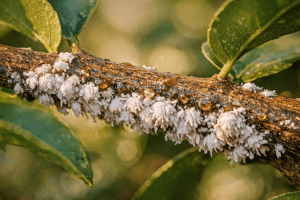
Powdery mildew is a fungal disease that affects many crops, from fruit plants to ornamentals, and is characterized by the formation of a powdery patina on leaf surfaces. The pathogen, consisting of several species of fungi, works by impairing photosynthesis and progressively weakening plants. In recent years, the evolution of technologies has enabled the introduction of advanced monitoring systems capable of detecting the onset of this pathology in real time. Among these solutions, Plantvoice® stands out for its ability to analyze plant sap and provide accurate data, enabling timely and targeted interventions.
Definition and characteristics of powdery mildew
Powdery mildew is manifested by the appearance of white, grayish, or yellowish spots on leaves, shoots, and, in some cases, fruit. These fungal formations alter appearance and impair vital plant functions, such as photosynthesis, reducing sugar production and, consequently, growth and crop yield. The disease develops in environments characterized by moderate temperatures and low humidity, conditions that favor the spread of spores through the air and the establishment of the pathogen on plant tissues.
Life cycle and spread of the pathogen
The life cycle of the fungus responsible for powdery mildew involves an initial phase of spores that, carried by the wind, reach the surfaces of leaves and shoots. The spores germinate under favorable conditions, developing filaments that penetrate tissues and establish infection. The speed with which the pathogen spreads makes continuous monitoring essential, as even a slight change in environmental conditions can lead to an increase in infection. Careful management of agronomic practices, such as pruning and optimizing irrigation systems, helps limit the favorable microclimate for the fungus.
Symptoms and impacts on cultivation
The first signs of powdery mildew are obvious and include the appearance of a whitish or grayish patina on the leaves. As the infection progresses, it is observed:
- Loss of photosynthetic capacity: fungal cover reduces light absorption, decreasing the synthesis of sugars needed for growth.
- Tissue degradation: leaves may deform and, in advanced stages, fall prematurely, compromising plant integrity.
- Reduced productivity: impaired plant metabolism directly affects fruit yield and quality.
Below is a summary table of the main characteristics of powdery mildew:
| Feature | Description | Impact/Considerations |
| Symptoms | White, grayish or yellowish spots on leaves, shoots and fruit | Reduced photosynthesis, leaf drop and deformities |
| Life cycle | Spread via spores that germinate under moderate temperature and low humidity conditions | Rapid spread in favorable environments, need for early intervention |
| Environmental factors | Temperatures between 18 and 27°C, low humidity, poor ventilation | Creation of ideal microclimates for fungus development |
| Impact on the plant | Compromised photosynthetic capacity, structural weakening and reduced productivity | Economic loss and decreased crop quality |
| Control Methods. | Agronomic management, use of biopesticides, and constant monitoring with sensory technologies | Targeted and timely interventions reduce indiscriminate use of chemicals |

Environmental and agronomic factors
Climatic conditions play a crucial role in the development of powdery mildew. Temperatures between 18 and 27 degrees Celsius, along with low humidity and insufficient ventilation, create a favorable environment for the fungus. Agronomic practices also have a significant impact: excessive plant density, uncalibrated irrigation and inadequate canopy management can contribute to the formation of favorable microclimates. Proper crop rotation and well-executed pruning interventions help limit the spread of the pathogen by improving air circulation and reducing the presence of shaded areas.
Monitoring technologies and the Plantvoice® solution.
The digital revolution has introduced advanced crop monitoring systems capable of detecting minute changes in plant physiological parameters. In this context, Plantvoice® represents a state-of-the-art solution. Sensors developed by Plantvoice® analyze sap in real time, providing detailed information on plant health and stress. This data, processed by sophisticated algorithms, allows farmers to take timely action, preventing the spread of powdery mildew and optimizing the use of resources such as water, fertilizer and plant protection products.
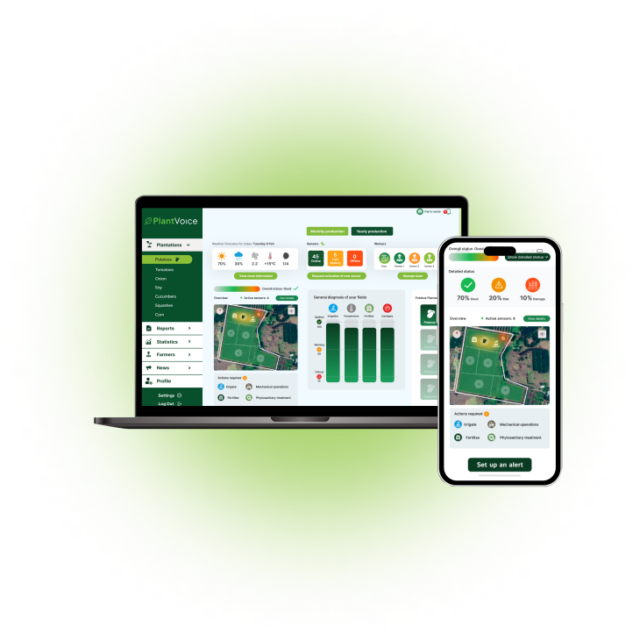
The innovation of Plantvoice® lies in its ability to integrate digital monitoring with proactive crop management. Using an intuitive platform, it is possible to visualize the data collected in real time, identify any anomalies, and plan targeted interventions. In this way, the system supports not only disease control but also more sustainable and efficient management of agronomic resources. The application of sensors in the field provides accurate and up-to-date information, helping to reduce waste and preserve the environment.
Intervention and prevention strategies
Powdery mildew control is based on integrated management that combines preventive interventions and corrective measures. Prevention is based on targeted agronomic practices, such as:
- Selection of resistant cultivars: the use of less susceptible varieties reduces the risk of infection and promotes healthy growth.
- Canopy management: careful pruning improves air circulation and minimizes shaded areas, limiting fungus establishment.
- Calibrated irrigation: adopting efficient irrigation systems prevents water stagnation and excessively wet conditions.
- Crop rotation: alternating crops interrupts the pathogen’s life cycle, reducing its presence in the soil.
These interventions, supported by monitoring technologies such as those offered by Plantvoice®, enable targeted and timely interventions, reducing the need for chemical treatments and improving the sustainability of agricultural practices.
Practical applications and benefits of technology
The use of sensors for digital monitoring has revolutionized disease management in crops. Through the continuous collection of physiological data, it is possible:
- Tailor interventions to the specific needs of each cultivated area.
- Reduce the use of plant protection products through early diagnosis and targeted interventions.
- Optimize irrigation systems, avoiding excess and ensuring efficient use of water resources.
- Increase crop yield and quality, preserving plant health and reducing economic losses.
The Plantvoice® solution fits into this context as an essential tool for modern and sustainable crop management. Thanks to its high-precision sensors and intuitive digital platform, it enables the detection of even the smallest changes in plant vital parameters, ensuring constant and accurate monitoring. The adoption of this technology promotes integrated management that allows powdery mildew to be addressed with innovative strategies, minimizing the use of chemical treatments and protecting the ecosystem.
Development prospects and future innovations
Technological developments are opening up new perspectives for disease control in crops. Agritech research is leading to the development of predictive systems that, through the integration of artificial intelligence (AI) and the Internet of Things (IoT), will be able to anticipate the onset of diseases such as powdery mildew. These advances will enable farmers to plan even more targeted and personalized interventions based on real-time data and complex predictive models.
The use of digital platforms for sensory data management is another step toward precision agriculture. The ability to collect, analyze, and integrate information from a variety of sources provides a comprehensive and dynamic view of crop status. In this way, operational and strategic decisions are supported by reliable and up-to-date data, promoting more responsible resource management. Solutions such as those offered by Plantvoice® emerge as indispensable tools for making agriculture increasingly resilient and sustainable, able to respond effectively to the needs of an ever-changing industry.
Plantvoice®: an ally for modern agriculture
The technology developed by Plantvoice® represents a breakthrough in plant disease monitoring. By integrating high-precision sensors with a digital platform, the system enables real-time monitoring of plant vital parameters and early detection of any abnormalities indicative of powdery mildew. This approach enables targeted intervention, reducing the indiscriminate use of chemicals and optimizing the use of resources. The Plantvoice® solution stands out for its ability to provide accurate and up-to-date data, promoting integrated and sustainable crop management.
At a time when agriculture has to respond to increasing production demands and greater concern for the environment, the adoption of advanced technologies is crucial. Digital monitoring, supported by innovative solutions such as that of Plantvoice®, makes it possible to address powdery mildew with modern and effective methods, transforming the way of working in the field and promoting agricultural management that is more precise, efficient and respectful of natural resources.
FAQ – Frequently Asked Questions about Oidium
- What are the distinguishing characteristics of powdery mildew in crops?
Powdery mildew manifests as a powdery patina on leaves and shoots and impairs photosynthesis, causing deformities and leaf drop. - How do environmental conditions affect the occurrence of powdery mildew?
Moderate temperatures, low humidity and poor ventilation create an ideal environment for the fungus spores to spread. - How can a digital monitoring system help manage powdery mildew?
Sensors collect real-time data on plant physiological parameters, allowing early detection of changes indicative of infection and targeted intervention. - What role does Plantvoice® play in powdery mildew management?
Plantvoice® offers an innovative solution by integrating sensors and digital platforms to continuously monitor plant health, enabling timely interventions and reducing the use of chemical treatments. - What are the benefits of using advanced technologies in cultivation?
The use of digital systems makes it possible to optimize resource use, improve crop yield and quality, and reduce environmental impact through targeted and customized interventions.