Plant health monitoring is the practice of tracking the condition of your crop over time so you can act on stress, disease and nutrient problems while there is still time to change the outcome. Done well, it is not a single check but a layered system: your own eyes in the field, imagery from the sky, and sensors on and inside the plant. Each layer buys you lead time, and the deeper you go, the earlier you see trouble coming.
Most orchards and vineyards still run on the first layer alone: walk the rows, spot the symptom, react. It works, but it has a built-in delay. By the time a leaf curls, a shoot wilts or a lesion appears, the plant has already been under pressure for days or weeks, and part of the yield or quality loss is locked in. This guide is written for you (the grower or agronomist weighing up a more continuous approach) and it maps the options honestly, from scouting to satellite to in-plant sensing.
What is plant health monitoring, and why isn’t spotting symptoms enough?
At its core, plant health monitoring means answering three questions on repeat: Is my crop under stress? Where? And what should I do about it? The difference between approaches is how early and how directly they answer.
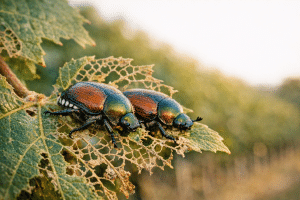
Visual scouting is the foundation, and it always will be. An experienced eye catches things no sensor is calibrated for. But it is periodic, subjective and, above all, late: it reads symptoms, which are the end of a process, not the start. Water stress, for example, disrupts a plant’s internal water transport long before the canopy shows it. According to the FAO, agriculture already accounts for roughly 70% of global freshwater withdrawals (FAO AQUASTAT), so waiting for visible wilt before you respond is expensive twice over, in lost crop and in wasted inputs.
The shift underway across the sector is from reactive to continuous monitoring: instead of sampling the crop occasionally and reading symptoms, you track the underlying signals constantly and read trends. That is the real meaning of moving “from spotting symptoms to continuous sensing.”
How do the main plant health monitoring methods compare?
There is no single best tool, each layer detects different things, at a different lead time and cost. The practical move is to understand what each one is good at and stack them deliberately.
| Approach | What it detects best | Lead time vs. visible symptom | Typical cost / effort |
|---|---|---|---|
| Visual scouting | Pests, lesions, physical damage, anything unusual | None, reads symptoms as they appear | Low cash, high labour and time |
| Satellite imagery | Field-scale vigour and variability (NDVI), broad anomalies | Days, at coarse resolution and cloud-permitting | Low to moderate; often subscription-based |
| Drone / UAV imagery | Row- and tree-level canopy stress, thermal water stress | Days, at high spatial resolution | Moderate; needs flights and processing |
| Soil sensors | Moisture and salinity in the root zone | Indirect, measures the soil, not the plant | Moderate; per-zone installation |
| In-plant sensors (sap) | The plant’s own water and nutrient status, directly | Days ahead, reads physiology, not appearance | Moderate; per-plant, self-installed |
A few things stand out. Imagery (from satellites or drones) is powerful for where: it maps variability across a block so you know which zone to walk. Vegetation indices like NDVI let you flag stress, nutrient deficiency and disease pressure early in the season, though the index tells you that something is off, not what or why (NC State Extension). Soil sensors tell you what is available in the ground, but not what the plant is actually taking up. And in-plant sensors close that last gap by measuring the plant itself.
What can continuous, sensor-based monitoring detect that scouting misses?
The value of continuous sensing is that it turns single snapshots into a trend line. A leaf that looks fine today tells you nothing about direction; a signal measured every few minutes tells you whether the plant is coping or sliding.
Continuous monitoring is particularly strong at catching:
- Water stress before wilt. Sap flow slows measurably as a plant closes down water transport, days before the canopy shows it. See our guide to detecting water stress before the symptoms appear.
- Nutrient imbalances. Changes in sap electrical conductivity flag shifts in nutrient status before deficiency shows on the leaves.
- The onset of physiological stress that precedes disease. A weakened, stressed plant is a more susceptible plant; catching the stress early is part of prevention.
- The plant’s response to your own actions. After you irrigate or fertigate, continuous data shows whether the plant actually recovered, so each intervention becomes measurable, not assumed.
Comprehensive reviews of the field confirm the direction of travel: sensor systems and remote sensing now allow non-destructive, repeated detection and quantification of crop stress across scales, supporting decisions that used to rely on visual judgement alone (Remote Sensing, MDPI 2023).
Where does in-plant sensing fit in your plant health monitoring stack?
Think of monitoring as layers of increasing directness. Scouting and imagery observe the crop from the outside, its appearance and canopy. Soil sensors measure the environment the roots sit in. In-plant sensing goes one layer deeper and reads the plant from the inside.
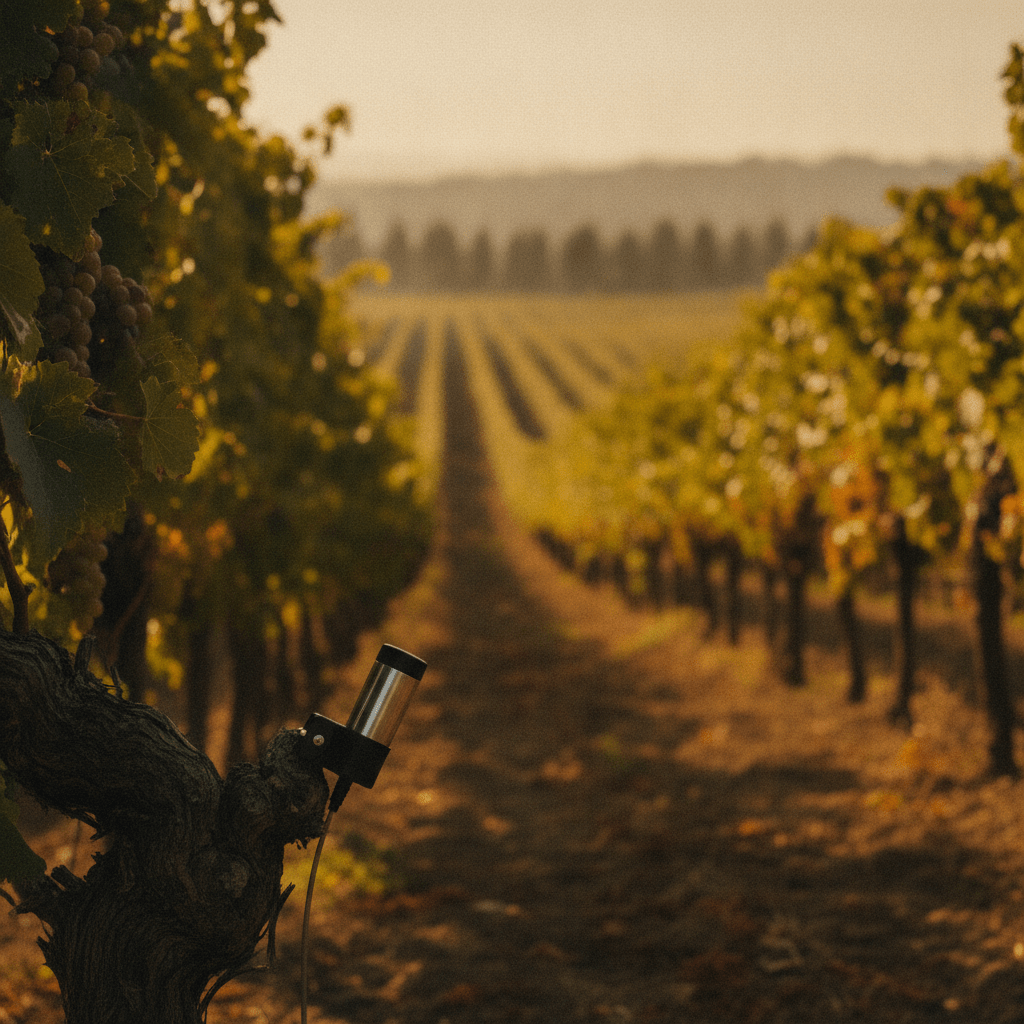
This is where our team positioned Plantvoice, and we describe it plainly: a patented micro-sensor, under 2 mm and installed by you in the stem, reads sap flow and sap salinity directly and continuously. Algorithms in the cloud turn those readings into a clear indication, the plant is coping, or it needs water or nutrients now. It does not replace your eyes or your imagery; it adds the one signal none of the outer layers can give you, because it comes from inside the plant rather than from how the crop looks.
In field deployments on orchards and vineyards, growers using sap-based monitoring have cut irrigation water by up to 40% while protecting yield and quality. For the mechanics, see how a sap flow sensor reads real-time plant water use.
The honest positioning: in-plant sensing is the deepest layer, not the only one. It is most powerful when it sits on top of good scouting and, where you have them, imagery and soil data, each answering the question it is best suited to.
How do you build a plant health monitoring program that works?
You don’t need every layer on day one. A workable progression:
- Keep scouting, but make it systematic. Fixed routes, fixed intervals, notes you can compare over time.
- Add a “where” layer. Satellite or drone imagery to map variability and tell you which zones deserve attention.
- Anchor the “how much” with plant data. Put continuous sensors on representative plants per homogeneous zone to read the block’s true physiological status.
- Set thresholds with an agronomist. Alert levels depend on crop, variety and growth stage, veraison in a vineyard is not fruit set in an olive grove.
- Act, then verify. Use the data after each intervention to confirm the plant responded, and adjust.
Whether you also rethink how you deliver water is a related decision, our comparison of sprinkler versus drip irrigation covers that side. Monitoring tells you when and how much; the delivery system executes it.
FAQ
What is plant health monitoring? Plant health monitoring is the ongoing practice of tracking a crop’s condition (water status, nutrient status, disease and pest pressure) so you can respond to stress before it causes yield or quality loss. It ranges from visual scouting to imagery to continuous in-plant sensors.
What is the difference between scouting and continuous monitoring? Scouting is periodic and reads visible symptoms, which appear late in a stress process. Continuous monitoring tracks underlying signals constantly, so it detects trends and often warns you days before symptoms become visible.
Can plant health monitoring detect problems before symptoms appear? Yes. Sensor-based methods (thermal and multispectral imagery, and especially in-plant sap sensors) can flag water and nutrient stress before the canopy shows it, because they measure physiology or reflectance rather than waiting for visible damage.
Do I need expensive equipment to start monitoring plant health? No. Systematic visual scouting and freely available satellite indices cost little. You add drone imagery, soil sensors or in-plant sensors as the value justifies it, usually starting with the zones or crops where losses are highest.
How does in-plant sensing compare to satellite or drone monitoring? Imagery is excellent for mapping where variability sits across a field. In-plant sensing measures the plant directly and continuously, giving the earliest and most specific read on that plant’s water and nutrient status. They are complementary, not alternatives.
Want to see the deepest monitoring layer on your own plants? Talk to our agronomists to design a monitoring program for your orchard or vineyard, or book a demo of the Plantvoice sensor and read your crop from the inside.