Lemon fertilization isn’t a seasonal practice to be left to the calendar. It’s a structured plan that follows the plant’s physiology , step by step, from winter to the end of the production cycle. Getting the timing or nutrient wrong can cost you a fortune in terms of yield, fruit quality, and the plant’s health.
In this article, we’ll explore the nutritional requirements of lemons, how their needs vary throughout the different phenological stages, how to develop an effective annual fertilization plan, and how to identify key deficiencies before they compromise production.
Why lemons have special nutritional needs
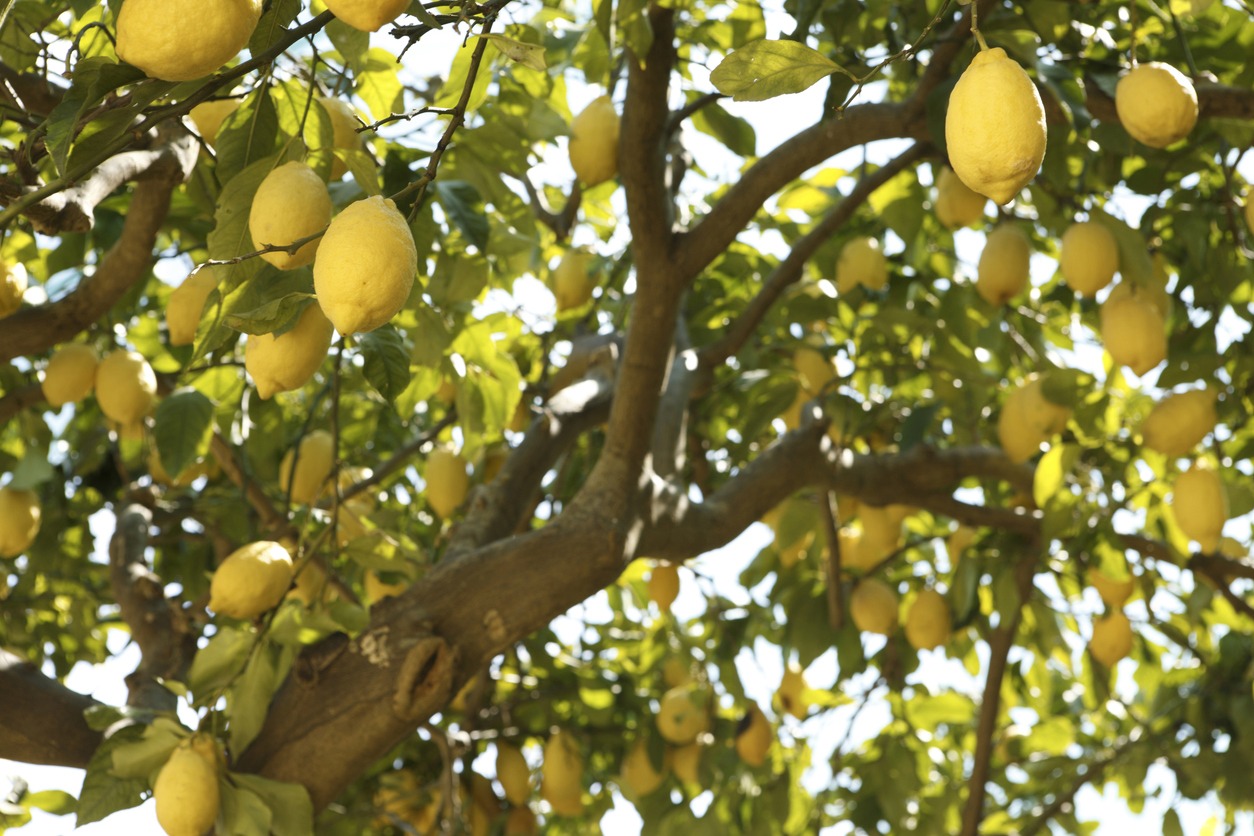
The lemon tree ( Citrus limon ) is an evergreen and polycarpic tree : unlike many other fruit species, it can simultaneously produce flowers, growing fruit, and ripe fruit on the same plant. This overlapping of physiological phases ensures continuous nutrient absorption throughout the year , with peaks in demand concentrated in spring and autumn .
The reference data for fertilization planning are the following:
| Element | Annual removal (kg/ha) for 300 q/ha |
| Nitrogen (N) | 170 |
| Calcium (Ca) | 125 |
| Potassium (K) | 90 |
| Phosphorus (P) | 30 |
| Magnesium (Mg) | 18.5 |
Indicative values for Mediterranean orchards in full production. Actual quantities vary depending on the variety, rootstock, expected yield, and soil characteristics. Always calibrate based on leaf and soil analyses.
Of all the nutrients, nitrogen and potassium are those that most influence yield and fruit quality . Calcium , often overlooked in fertilization planning, is actually the second most important nutrient in productive citrus orchards.
Macronutrients: role, effects of deficiency and excess
Nitrogen
Nitrogen is the most critical element. It plays a direct role in plant growth : it regulates vegetative growth, skin thickness, and fruit number. An adequate supply supports vigorous shoots and deep green foliage, ensuring optimal photosynthetic efficiency.
Excess causes significant effects on commercial quality : thicker and wrinkled skin, reduced juice content, delayed lignification of the tissues with greater susceptibility to mal secco, out-of-phase sprouting with potential drop, delayed veraison and ripening.
The deficiency manifests itself with widespread paleness across the entire leaf , including the veins, stunted growth, small-sized fruit with thin skin and early veraison.
Potassium
Potassium regulates the translocation of photosynthetic agents , stomatal opening, and cellular water balance. During fruit growth and ripening, it is the nutrient most in demand.
In excess , it produces larger-than-normal fruit, but with thick skin , less juicy, and more acidic . A deficiency in lemon causes a bronzed coloration of the leaves with a tendency to curl, a reduction in fruit size, and a weakening of the stem attachment. A phenomenon also related to potassium deficiency is cracking of the albedo, which manifests as a bump on the epicarp.
Phosphorus
Phosphorus is used less by citrus trees than by other fruit species: excesses and deficits are rare under normal soil conditions. It plays an important role during the flowering phase and the first weeks of fruit growth , supporting energy processes and root development. In fertigation, the first application of the season should be primarily phosphorus-based, in the order of 10-15 P₂O₅ units, to support root renewal before flowering.
Mesoelements and micronutrients: the often overlooked part
Calcium and Magnesium
Calcium is absorbed moderately during fruit formation . In calcareous Mediterranean soils, absolute calcium deficiency is rare, but excess carbonate in the soil competes with the absorption of other elements, primarily iron and manganese. Calcium should preferably be applied through foliar application or fertigation after fruit formation.
Magnesium is present in significant concentrations in citrus fruits. A deficiency causes chlorosis that extends to the entire leaf blade, sparing a green triangle at the base of the petiole: a fairly characteristic visual symptom. The fruits are small, low in sugar and acidity.
Iron, Zinc and Manganese
Iron, zinc, and manganese are the three most critical micronutrients in lemon trees grown on high-pH soils. Their availability decreases dramatically in alkaline conditions, regardless of the total soil content. Visual diagnosis of these three deficiencies is often unreliable because the foliar symptoms overlap: all three cause interveinal chlorosis on young leaves, with veins remaining green.
| Element | Where chlorosis appears | Differential feature |
| Iron | Young leaves | Very marked chlorosis, green veins, can extend to older plants in severe deficiency |
| Zinc | Young leaves | Small, narrow leaves with a sharp apex; presence of chlorotic suckers in the crown |
| Manganese | Young leaves | Discoloration less noticeable than zinc, fading towards the edges |
| Magnesium | Old leaves | Chlorosis sparing the green triangle around the petiole |
Soil pH is the determining factor for micronutrient management : corrections with iron chelates in fertigation or by foliar application are effective in the short term, but structural pH management through organic matter and acidifiers remains the most effective strategy in the long term.
Annual fertilization plan
The following plan is structured for a mature plantation in a Mediterranean environment and takes into account the phenological stages of the lemon tree. The quantities are indicative and should be adjusted based on soil analysis, the age of the plant, and expected yield. For young plants, nitrogen should be applied in at least three doses during the spring-summer season.
December – February: preparing for vegetative recovery
During this phase, the lemon tree replenishes its reserves and reactivates its root system . The goal is to provide a balanced nutritional base that allows for an orderly vegetative recovery: regular flowering depends in part on the quality of winter nutrition. Nitrogen must be distributed in a balanced manner to avoid excessive vegetative growth, which would be detrimental to subsequent flowering.
March – May: flowering, fruit set, fruit formation
This is the most delicate phase of the production cycle . Flowering and fruit set depend on the availability of phosphorus, potassium, boron, and calcium . The first fertigation application of the season should focus on phosphorus to support root renewal. In the following weeks, nitrogen becomes a priority in the post-flowering phase . Splitting in fertigation allows for a 20-25% reduction in application rates compared to traditional applications, minimizing losses due to leaching and improving root absorption efficiency.
June – August: fruit swelling and potassium requirement
In the second half of the season, the demand for potassium increases , as it regulates sugar translocation, skin thickness, and stress resistance. An insufficient supply during this phase directly translates into smaller fruit sizes and poor commercial quality .
Nitrogen plays a secondary role at this stage : too much in summer aggravates skin problems and delays ripening. Potassium should be applied gradually, preferably through fertigation.
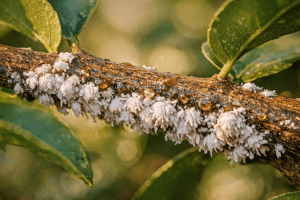
From late June, monitoring for citrus mealybugs ( Planococcus citri and Saissetia oleae ) is essential. If they are present, treatment with mineralized white oil should be carried out by thoroughly wetting the vegetation and the most sheltered areas of the canopy.
September – October: closing of the cycle and preparation for the next season
A targeted supply of nitrogen at the end of summer promotes the colouring of the fruit and the preparation of the flower buds for the following season .
| Period | Priority element | Agronomic objective | Via |
| Dec – Feb | Balanced N + organic matter | Reserves, radical reactivation | Soil |
| Jan – Feb (foliar) | Microelements | Preparing for flowering | Leaf |
| Mar – May (pre-flowering) | P, then N | Root renewal, flower development | Fertigation |
| Apr – May | Ca, B | Fruit set, reduction of fruit drop | Leaf |
| Apr – May | Mg, Fe chelate | Chlorosis prevention | Fertigation + foliar |
| June – August | K | Fruit enlargement, quality | Fertigation |
| September – October | N (ammonium sulfate) | Coloring of fruits, flower buds | Soil |
The Limits of Visual Diagnosis: Why Observation Is Not Enough
Among the most common mistakes in lemon nutritional management is the tendency to intervene only when visible symptoms appear on the leaves or fruit. The problem is structural: foliar symptoms of deficiencies such as iron, zinc, and manganese only appear when the plant has already suffered a significant deficit, and in many cases, simultaneous deficiencies make visual diagnosis unreliable.
The same applies to water stress , which alters nutrient availability before the plant even shows any recognizable signs. Plantvoice works on this principle : monitoring the state of the sap in real time allows for the detection of water stress and physiological imbalances , making fertilization an action based on objective data rather than on pre-existing symptoms.
Fertigation: advantages and criteria for use
For systems equipped with an irrigation system, fertigation is the tool that offers the best balance between efficiency of use and precision of application . Compared to traditional soil application, it allows for a 20-25% reduction in the quantity distributed while maintaining the same effectiveness .
The essential criteria for effective fertigation on lemon trees :
- Start seasonal fertigation shortly before flowering , with an initial application mainly containing phosphorus.
- In later stages, give priority to nitrogen in the post-flowering and initial swelling phase .
- Shift focus to potassium in the second part of the season .
- Calcium and mesoelements in the early stages of fruit growth.
- Avoid high nitrogen inputs in midsummer : they slow down ripening and worsen the quality of the peel
Water management is closely linked to fertilization efficiency: marked swings between water stress and sudden growth increases the plant’s sensitivity and reduces production regularity.
FAQ – Frequently Asked Questions About Fertilizing Lemon Trees
1. Does excess nitrogen on lemon trees increase production?
No. Excess nitrogen does not increase fruit number but degrades their commercial quality : it produces thicker and wrinkled skin, reduces juice content, delays veraison and ripening, and can promote out-of-phase sprouting resulting in fruit drop. Balanced nitrogen management , divided into 3-5 seasonal applications , optimizes yield and quality without unbalancing the plant.
2. How can you distinguish iron deficiency from zinc deficiency on lemon?
Both cause interveinal chlorosis on young leaves with green veins , making visual diagnosis difficult. Zinc deficiency tends to produce smaller, narrower leaves with sharp tips , often accompanied by chlorotic suckers in the crown. Iron deficiency affects interveinal tissue more uniformly and, if prolonged, extends to older leaves. In many plants, the two deficiencies coexist. Before treating, it is useful to check the pH and, if in doubt, resort to leaf analysis.
3. When should post-harvest fertilization be performed and why is it important?
Nitrogen application in late summer (September-October) is one of the most underestimated interventions in lemon grove management . It promotes the coloration of late-ripening fruit, improving the commercial quality of the final harvest. Adequate post-harvest nutrition supports the development of flower buds and contributes to regular production the following year : an orchard that produces alternating crops often has poor post-harvest nutritional management.
The most effective fertilization is the one applied at the right time. Plantvoice detects the plant’s physiological state in real time, so every nutritional intervention is based on data, not symptoms. Discover the technology.