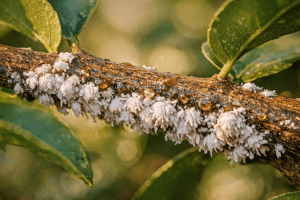
Downy mildew is a disease of considerable importance to the agricultural sector, capable of compromising plant health and affecting crop quality. This disease, caused by microorganisms belonging to the oomycete group, affects a variety of crops, from grapevine to vegetable plants, and develops under favorable environmental conditions characterized by high humidity and moderate temperatures. The following article reviews in detail the characteristics of downy mildew, its infectious cycle, observable symptoms and modern monitoring technologies, minimizing references to specific commercial solutions.
Definition and origin of downy mildew
Downy mildew is a fungal disease distinct from traditional fungi because of the biological characteristics of its pathogens, the oomycetes. These microorganisms, while having some traits similar to fungi, have significant differences in life cycle and mode of spread. The disease is manifested by the appearance of dusty spots and coatings that develop on leaf surfaces, altering the aesthetic appearance and physiological functions of the plant.
The infectious episode starts with the formation of spores that, dispersed by water and wind, settle on the exposed surfaces of leaves. Once ideal conditions are reached, the spores germinate and the mycelium penetrates the plant tissues, establishing the infectious process. The rapid multiplication of pathogens makes early intervention of paramount importance to contain the spread of the disease.
Environmental conditions and favoring factors
The spread of downy mildew is closely linked to specific climatic conditions. Environments characterized by high humidity and temperatures generally between 15 and 25 degrees Celsius provide the pathogen with an ideal habitat. Under such conditions, frequent rainfall and insufficient ventilation contribute to microclimates in which stagnant moisture facilitates oomycete development.
Agronomic practices also play a crucial role in the spread of the disease. Excessive planting density, suboptimal irrigation management, and planting arrangements that prevent good air circulation increase the risk of occurrence. Agronomic techniques involving proper crop rotation and targeted pruning interventions can help minimize risk factors, thereby limiting the establishment of the pathogen.
Symptomatology of downy mildew
The signs of downy mildew are obvious and vary depending on the affected crop and environmental conditions. Some typical symptoms are listed below:
- Leaf spots: the first manifestations are observed with the appearance of yellowed or brown spots on the leaves. These lesions, initially localized, gradually expand and may coalescing to form areas of compromised tissue.
- Fungal coating: on some surfaces, a thin, powdery layer forms, often visible to the naked eye, highlighting the presence of the pathogen.
- Dehydration and desiccation: infected leaves lose their ability to retain water, leading to visible tissue dehydration. This phenomenon negatively affects photosynthesis and plant metabolism.
- Early organ drop: in some cases, the massive presence of the infection induces early leaf drop, exacerbating the deterioration of the plant and compromising its viability.
Careful observation of these signs is crucial for early detection of disease onset and activation of targeted intervention measures.
Infectious cycle and mode of spread
The life cycle of the oomycetes responsible for downy mildew consists of several stages. Initially, the spores form and are dispersed in the environment through the action of wind and rainwater. Upon contact with leaf surfaces, under favorable conditions, the spores germinate and mycelium develops. The latter penetrates tissues through small openings or through pre-existing lesions, establishing the infectious process.
Once inside the plant, the mycelium spreads rapidly, causing progressive damage that compromises the photosynthetic capacity and normal functioning of plant organs. The continuous repetition of this cycle promotes rapid expansion of the disease, making constant monitoring essential to prevent a critical threshold from being exceeded.
Impact on crops and economic consequences
The presence of downy mildew in crops leads to a number of negative effects that are reflected in both product quality and overall crop yield. Reduced photosynthesis, due to compromised leaf cover, leads to lower production of sugars, which are essential for plant growth and development. This phenomenon results in less abundant and lower quality fruit.
In addition to the qualitative impact, the spread of the disease generates significant economic losses. The increased costs associated with corrective interventions, together with decreased production yield, is a source of stress for the farmer. Therefore, the adoption of technological solutions such as Plantvoice® for real-time monitoring is an essential strategy to mitigate these effects and safeguard the productive value of the soil.
Integrated agronomic practices for prevention
Effective management of blight also involves the adoption of preventive agronomic practices. Prominent among these are:
- Choice of varieties: using cultivars with higher natural resistance to the pathogen significantly reduces the occurrence of the disease.
- Irrigation management: well-calibrated irrigation systems avoid water stagnation and excessively wet conditions, which favor oomycete development.
- Targeted pruning: proper pruning promotes air circulation within the canopy, reducing the formation of microclimates conducive to infection.
- Crop rotation: alternating crop species interrupts the pathogen’s life cycle, limiting its ability to accumulate in the soil.
The integration of these measures, combined with digital monitoring, enables a multidimensional approach to blight prevention, thus ensuring more efficient and responsible crop management.
An integrated approach to crop management
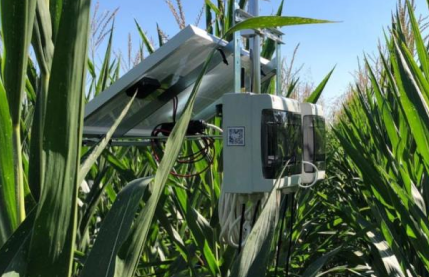 Blight control requires a comprehensive view that integrates digital monitoring, traditional agronomic techniques (or innovative ones such asregenerative agriculture), and prevention practices. An integrated approach allows for accurate crop management, where each element is controlled and optimized in a coordinated manner. The synergy between digital technologies and agronomic knowledge makes it possible to identify at-risk areas in advance and intervene accurately, while maintaining high standards of quality and sustainability.
In this context, the ability to collect and analyze real-time data is a key resource for improving operational efficiency and reducing the economic and environmental impacts of blight.
FAQ
- What is downy mildew and what are the main pathogens involved?
Downy mildew is a disease caused by oomycetes, microorganisms that infect numerous crops, compromising plant health and crop quality. - What environmental conditions favor the development of blight?
The occurrence of the disease is favored by moist environments and moderate temperatures, along with agronomic practices that generate stable microclimates. - What are the hallmarks of downy mildew infection in plants?
Typical symptoms include the formation of yellowed or brown spots on the leaves, fungal coating, and progressive tissue desiccation, with eventual premature fall of plant organs. - How can digital technologies contribute to blight monitoring?
The use of high-precision sensors makes it possible to detect changes in the physiological parameters of plants, providing real-time data that help identify at-risk areas early on. - What preventive practices can be adopted to contain the occurrence of blight?
Adoption of resistant varieties, proper irrigation management, pruning interventions to improve ventilation, and crop rotation are effective strategies to limit the development of infection. - How does an integrated approach improve the management of crops affected by blight?
By combining traditional agronomic techniques with digital monitoring, targeted and timely action can be taken, optimizing resource use and reducing the use of chemical treatments.