

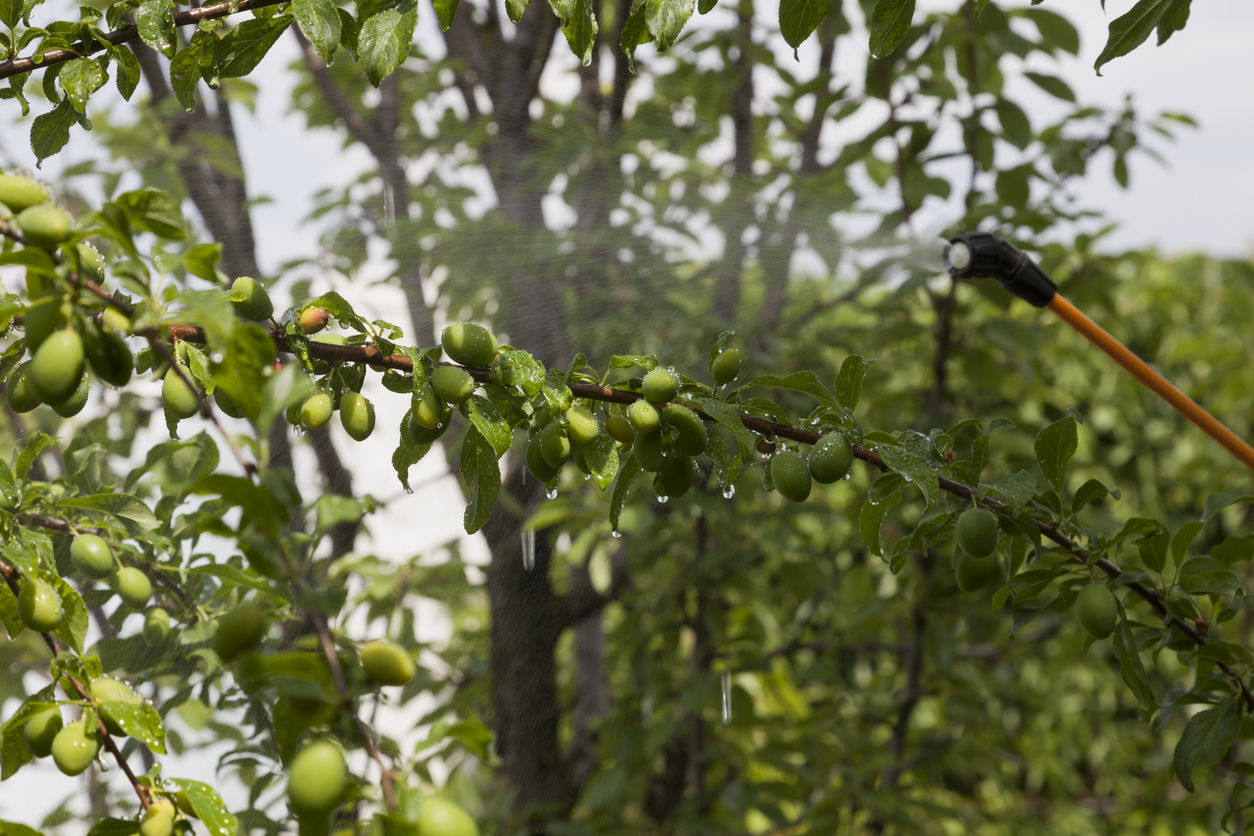
Foliar fertilization involves supplying nutrients to the plant through the leaves , rather than through the roots. Nutrients are absorbed through the leaf cuticle, stomata, and trichomes, and are then translocated via the phloem to the tissues that require them most. It is a well-established technique , but its effectiveness depends critically on three factors: which nutrients are administered, at which phenological stage, and under which environmental conditions.
In this article we will see in which phenological phases foliar fertilizers really affect the quality of the crop , which elements to absorb through the leaves and why, and which operating conditions determine the success or failure of an intervention .
Why the leaf route changes the game
Nutrient uptake through the leaves can be significantly faster than through root fertilization, but this applies to specific nutrients and at specific phenological stages. This data cannot be generalized to the entire fertilization program .
The mechanism is this: the elements pass through the cuticle and the upper epidermis , or penetrate through the stomata and trichomes on the lower surface, to then be translocated via the phloem to the parts of the plant with the greatest nutritional demand at that moment. The speed with which this occurs varies greatly depending on the element.
Nitrogen, potassium, and magnesium reach 50% absorption within a few hours. Phosphorus takes 1 to 5 days. Calcium takes 1-2 days, but with very slow initial absorption : about 10% on the first day, with the remainder occurring over the next 10-20 days. This information is crucial for understanding when to anticipate calcium supplementation.
Leaf receptivity: not all species respond in the same way
Leaves have their own capacity to retain and absorb nutrients , called foliar cation exchange capacity . The higher this value, the lower the risk of leaching and the greater the nutritional efficiency of the treatment . This capacity varies significantly between species: grapevines are among the most susceptible crops, while cherry trees are among the most critical.
On species with low receptivity , the cuticle retains less of the nutrient solution and leaching nullifies part of the intervention: for this reason, the choice of wetting and tackifying agents in the formulation is not a secondary detail, but the factor that determines whether the product is absorbed or lost.
When to intervene: the phenological phases that matter
Foliar fertilization is not a substitute for root fertilization . The quantities of nutrients that can be supplied through foliar application are limited : sufficient to fill peaks in demand or correct deficiencies, but not to cover the entire seasonal requirement. The most common mistake is to use it in a dispersive manner throughout the season instead of concentrating it during the windows where the agronomic return is greatest.
The phases in which the leaflet expresses the maximum qualitative potential on the fruits are:
- Post-fruit set: In the weeks immediately following petal fall, the developing fruit cells divide intensively. A greater number of cells produced during this phase directly translates into achievable fruit size. Calcium availability at this time is crucial: it is necessary for cell division and for the proper structure of the walls of each developing cell.
- Rapid growth: Potassium applied through the leaves at this stage improves fruit filling, sugar content, and color. It affects the sugar/organic acid ratio, which is the main determinant of flavor.
- Pre-harvest: Targeted calcium applications reduce the risk of deficiency diseases such as bitter pit in apple trees and cracking in cherry trees, although effectiveness varies depending on the cultivar, yield, and seasonal conditions. Foliar calcium application at this stage should be considered a complement to overall nutritional management, not a stand-alone solution.
- Post-harvest: In fruit and vine growing, post-harvest foliar nutrition promotes the accumulation of reserve substances, with positive effects on vegetative recovery the following season.
Which elements for which qualitative objectives?
| Element | Foliar application is recommended when… | Main qualitative effect |
| Calcium (Ca) | Alkaline soils, K/Ca antagonism, poor basipetal mobility | Caliber, compactness, shelf life |
| Potassium (K) | Peak demand growing | Sugar content, color, specific weight |
| Boron (B) | Fruit set; on species with poor phloem mobility of boron (e.g. walnut, grapevine) | Fruit setting quality, sugar transport |
| Zinc (Zn) | Deficit on clayey or high pH soils | Auxin synthesis, fruit development |
| Magnesium (Mg) | K/Mg antagonism, phases of high photosynthetic activity | Photosynthetic efficiency, fruit filling |
| Nitrogen (N, urea) | Post-harvest or vegetative recovery | Nitrogen reserve charge for the season |
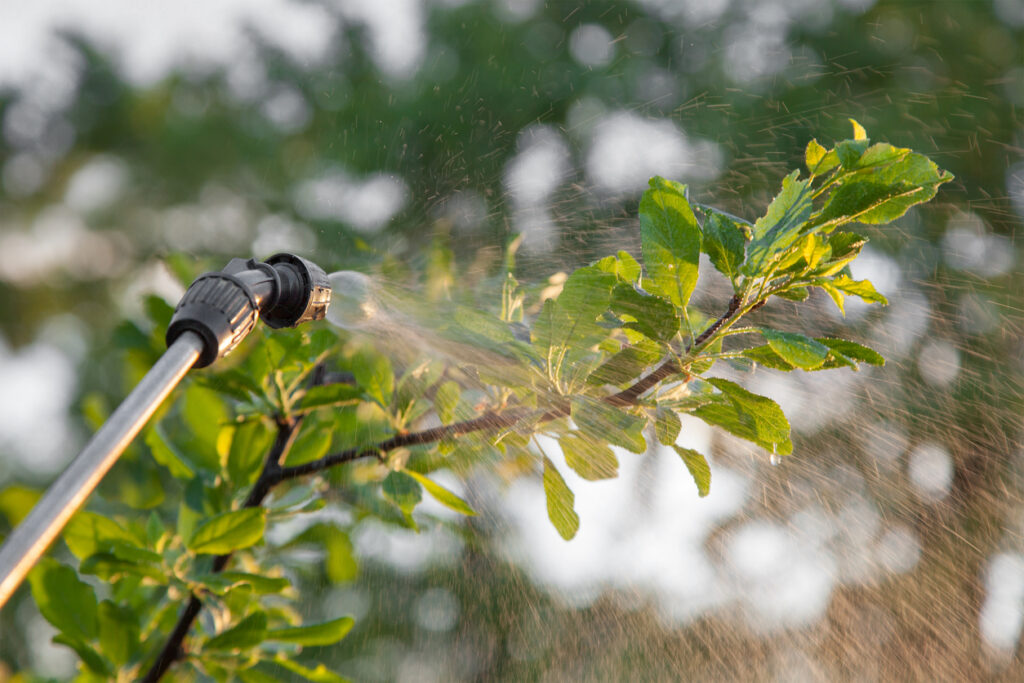
Calcium deserves special attention, as its mobility in the phloem is poor . Once distributed to older tissues, it has difficulty reaching rapidly growing fruits or meristematic tissues . For this reason, foliar delivery during growth is often the only way to ensure its effective presence where it is needed.
How does absorption work?
The effectiveness of a foliar fertilizer depends largely on its formulation , not just its chemical composition. A poorly formulated product applied at the right time can still fail.
Co-formulating agents play a specific technical role:
- Wetting agents: they reduce the surface tension of the water, preventing the solution from collecting in droplets that concentrate the salts on small areas of the leaf with the risk of phytotoxicity.
- Tackifying agents: they retain the product on the leaf surface even after drying or in case of moderate wind, increasing the contact time available for absorption.
- Carrier agents: such as urea, amino acids and chelates, they promote the passage of elements through the cuticle, acting as molecular carriers.
In general, low molecular weight molecules tend to cross the cuticle more easily than complex ionic compounds. Monovalent cations like K⁺ penetrate more easily than divalent cations like Ca²⁺ , which tend to bind to the negative sites of the cuticle, reducing their own penetration. This explains why the formulation of a calcium foliar fertilizer requires greater technical attention than a potassium foliar fertilizer.
When and how to apply to avoid wasting the product
Even the best product loses much of its effectiveness if applied in the wrong conditions.. The operating parameters to be respected are:
- Relative humidity above 70% : promotes the opening of the stomata and prolongs the leaf wetness time.
- Temperature around 20°C : absorption increases with heat, but above the optimal threshold there is a risk of phytotoxicity.
- Moderate wind : Drift reduces uniform spray application on the canopy and disperses some of the product before it reaches the leaves. As a practical industry guideline, a speed of less than 8-10 km/h is generally recommended, although the threshold varies depending on the type of nozzle, droplet size, and crop height.
- No rain in the hours following application : essential for slowly absorbed elements such as calcium and iron.
- A slightly acidic solution pH , between 5 and 6, is suitable for most elements; lower values may be necessary for phosphorus and specific trace elements depending on the formulation used.
The ideal application time is early morning or late evening . During the middle of the day, with strong sunlight, the rapid evaporation of the solution reduces contact time and increases the risk of burns.
Knowing that the post-fruit set window is critical for calcium is well established, but visual observation detects stress after physiological damage has already occurred . Abnormal leaf color, symptoms on fruit, and changes in turgidity are late signals. The plant has already redistributed its reserves, compromised cell division, and closed that window. Plantvoice works on this boundary: it translates the plant’s internal biochemical signals into actionable data, shifting the decision to intervene from the symptom to the cause.
Disadvantages and limitations to keep in mind
No tool is without its drawbacks. Foliar fertilization has three structural limitations that a technician must be aware of:
- Limited supply quantities: cannot cover seasonal needs for an element, only fill peaks in demand or correct acute deficiencies.
- High unit cost: The cost per kg of nutrient is higher than that of traditional fertilizers. The efficiency of the intervention must justify the investment.
- Risk of phytotoxicity: Leaves, flowers, and developing fruit are sensitive structures. An inadequate formulation or application under severe water stress can cause visible and long-lasting damage.
FAQ – Common questions about foliar fertilization
Can foliar fertilization replace soil fertilization during the fruit growth period?
No. Foliar application is a complement, not a substitute . Plants absorb the majority of nutrients through their roots. Foliar fertilizers are effective at peaks in nutritional demand or when soil or root conditions prevent regular absorption . Using it as the sole nutrient source produces unsatisfactory results and progressive deficiencies.
Why does calcium applied to the soil often fail to reach growing fruit?
Calcium is an element with limited mobility in the phloem : it moves predominantly in an acropetal direction with the xylem flow, easily reaching the mature leaves but with difficulty the rapidly growing fruits or the meristematic tissues that transpire poorly. For this reason, during periods of strong fruit growth, the foliar route is often the only one capable of ensuring effective distribution .
What is the real risk of phytotoxicity with foliar fertilizers?
The risk is especially real in conditions of high temperatures and strong radiation, with plants under water stress , or using products not specifically formulated for foliar use . Excessive concentrations of salts on the leaf surface cause burns. It is essential to respect the doses indicated on the label , apply during the coolest hours , and use products with wetting agents that ensure uniform distribution.
Do you apply foliar sprays when you see symptoms, or when the plant actually needs them? Visual signs of deficiency appear after the window of opportunity has already closed. Plantvoice monitors the plant’s internal physiological parameters to anticipate the decision.