Powdery mildew , or powdery mildew , is one of the most common enemies of plants and should not be underestimated. It begins with a light white coating on the leaves , but if left unchecked, it can compromise the growth and productivity of crops . Knowing how it develops and how to prevent it is the first step to keeping plants strong and healthy.
In this article, we’ll look at everything you need to know to treat the disease in a conscious, sustainable, and innovative way.
What is powdery mildew and how does it manifest itself?
Powdery mildew is a very common fungal disease, potentially damaging to a wide range of plants, such as roses, zucchini, strawberries , tomatoes, and many others. Also known as powdery mildew , it is caused by several species of fungi, which vary depending on the host plant. The favorable climate for this fungus is humid and warm , with poor ventilation. In fact , spring, early summer, and autumn are the seasons in which the disease is likely to appear, which is why it is also known as the ” fair-weather fungus .”
Powdery mildew is very dangerous because it survives overwintering in buds and the tips of branches, either as a latent mycelium or as specialized structures called cleistothecia . It then reactivates in spring, when new leaves emerge. The spores that form on the surface of plants are carried by the wind and can easily infect new plants.
Among the best known forms we find:
- Powdery mildew of roses : it appears on leaves and buds.
- Powdery mildew of the vine : affects leaves and bunches.
- Powdery mildew of American gooseberry : causes a brownish crust to form on the fruit, preventing it from ripening.
The main symptoms
Recognize symptoms early Early detection of the disease is essential for timely intervention. Powdery mildew manifests itself with several characteristic signs, which primarily affect the above-ground parts of the plant:
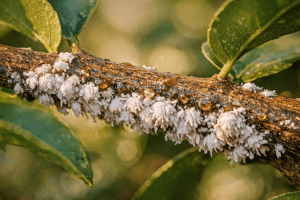
- Light-colored spots on the aerial parts, on which a whitish, powdery mold forms
- Necrosis of the tissues around the infected areas, which take on a brownish color.
- Abortion or deformation of the fruits , which may be malformed or have irregular growth.
- Soft fruits , less intense in colour and tend to rot.
- Cracks in the fruit , which favor the entry of other fungi.
How to prevent powdery mildew disease
Prevention is the most effective way to protect plants from this disease. First of all, it’s important to know that the disease is favored by excessive nitrogen fertilization and weak or dry plants. Therefore, it’s possible to adopt some agronomic practices:
- Avoid excessive nitrogen fertilization , which makes the soil vulnerable to fungal attack.
- Promote air circulation between plants, keeping them at the right distance.
- Prune old or damaged parts regularly to improve ventilation and reduce stagnant humidity.
- Remove dry leaves or plant debris at the end of the season to prevent the fungus from infecting the plant the following season.
- Avoid evening watering .
- Prefer a fertilization rich in potassium .
- Treat the plant preventively with natural fungicides based on sulfur or sodium bicarbonate , when periods of humidity are expected.
- Choose powdery mildew-resistant varieties when possible.
- Practicing crop rotation helps reduce the presence of the pathogen in the soil, maintaining a more balanced soil.
- Monitor plants constantly for early signs of infection.
Methods and remedies to combat powdery mildew
When powdery mildew appears on plants, disease management methods are crucial. Here are the main strategies to adopt to intervene and limit its spread:
- Use antagonistic fungi , such as Ampelomyces quisqualis .
- Apply natural plant extracts , such as neem oil or horsetail extract , for their antifungal action and to strengthen plant tissues.
- Integrate microbiological biostimulants , such as the beneficial bacterium Bacillus subtilis .
- Use sodium or potassium bicarbonate , diluted with water.
- Use sulfur- based products, such as Cuban zeolite and other tonics.
- Remove affected parts promptly to reduce the possibility of spreading the fungus.
- In more serious cases, chemical fungicides can be used, taking great care to avoid causing damage to plants and the surrounding environment.
Powdery mildew during flowering: how to treat it?
When powdery mildew appears during flowering, it’s important to intervene gently to protect the flowers and fruit without compromising production. During this phase, it’s best to resort to natural remedies , as they’re effective but not overly aggressive. For example, it’s recommended to spray water with a slightly alkaline pH , repeating every few days and maintaining good ventilation to reduce humidity . You can then apply water with a small amount of hydrogen peroxide to disinfect the leaves. Other natural remedies recommended during flowering, and already mentioned, include neem oil, baking soda, and garlic extract.
By following these precautions, it is possible to contain powdery mildew even during flowering, keeping the plant healthy.
Plantvoice
Powdery mildew tends to develop more easily on stressed, unevenly watered, or nutrient-poor plants . For this reason, it’s important to be able to understand the plant’s health in real time so you can adopt the most appropriate agronomic practices.
Plantvoice It is a technology that allows monitoring the salinity and sap flow of the plant , providing useful data on its physiological state . This allows farmers and growers to:
- Irrigate more precisely , avoiding excess humidity.
- Balance fertilization better .
- Recognize stressful situations early.
- Optimize the use of water and fertilizers .
This innovative technology, the size of a toothpick, allows you to manage your crops effectively and optimised , in a sustainable and minimally invasive way.
FAQ – Frequently Asked Questions about Powdery Mildew
1. Can powdery mildew return after treatments have been performed to combat it?
Yes, powdery mildew is a persistent disease that can survive even through the winter on infected plant debris. For this reason, it’s essential to remove all infected material and apply preventative treatments.
- What are the main causes of powdery mildew spread?
The main causes of the spread of this fungal disease are high humidity , moderate temperatures between 15°C and 25°C , and heavy rainfall . These conditions favor the germination of spores and the growth of fungal mycelium.
- How can powdery mildew be prevented organically?
To prevent powdery mildew organically, it’s helpful to adopt proper irrigation management (preferably drip irrigation), choose resistant varieties , remove diseased plant debris , and use natural treatments . In addition to these strategies , crop rotation is also possible.
- Can powdery mildew be treated with natural remedies?
Yes, powdery mildew can be treated with natural remedies. Neem oil and baking soda diluted in water are recommended. It’s important to intervene promptly to prevent the risk of the disease spreading and worsening the infection.
- For which plants can powdery mildew pose a threat?
Powdery mildew can affect a wide range of plants , but not all react the same way. Those most affected are roses, zucchini, cucumbers, melons, strawberries, grapevines, apples, and peaches. Some varieties of these plants are more resistant, so it’s important to choose those least susceptible to the disease.
Listen to your plants with Plantvoice .