Known not only for its sweet fruits but also for its symbolic and metaphorical value, the fig tree has spanned centuries of history. In fact, its origins are very ancient, so much so that its leaves are even mentioned in the Bible in the famous episode of Adam and Eve. Originally from the Middle East, today it is particularly widespread throughout the Mediterranean area, but it is also cultivated in Pakistan, India, China, California and Argentina. In general, it is a plant that withstands drought well and is able to adapt to a variety of climatic and environmental conditions, but it prefers warm weather and well-drained, fertile and slightly alkaline soils. It does not tolerate winter frosts, which is why in Italy it is mainly found in the south.
How to recognize fig diseases: major fungal diseases
Despite being a hardy plant, the fig tree is unfortunately not immune to diseases that can affect its health, in some cases even leading to its death. But there is good news: there are many remedies we can take to treat these diseases and, as we shall see, there are also tools to prevent them.
The rust of the fig tree
One of the most common diseases is fig blight, caused by a fungus called Puccinia fici. Like all fungi, it develops mainly during the wetter and colder seasons such as autumn and winter. This disease mainly attacks the leaves, which turn yellow at the top and brown at the bottom, resulting in the fall and depletion of the foliage. In addition, fig rust can also affect the fruits, leading to a delay in their ripening, and the shoots.
Treating this disease requires treating the plant with a specific antifungal, but useful remedies include pruning infected organs, improving soil drainage, and avoiding excessive irrigation, which can increase moisture and promote better aeration of the foliage.
The gray mold
Another widespread fungal infection is gray mold, also known as Botrytis from the name of the fungus that originates it, Botrytis cinerea. Just like rust, this disease affects not only the leaves but also the branches and fruits, on which gray-brown spots appear that can evolve into the typical dusty gray mold, causing the fruit to rot prematurely.
Managing mold is not easy, but certainly the first step is to prune and remove the infected parts as soon as possible and burn them, to prevent the spores from spreading through the orchard and affecting other plants as well. It is also essential to avoid water stagnation and ensure good air circulation.
Downy mildew
Fig blight, caused mainly by the oomycete Phytophthora palmivora, is a fungal disease that develops mainly in humid environments with mild temperatures. It initially occurs on the leaves, where small yellowish spots appear that turn into brownish-blackish, necrotic areas over time. Under conditions of high humidity, a thin whitish or grayish mycelial layer, typical of the pathogen, forms on the underside of the leaves. Affected leaves tend to crumple, desiccate and fall prematurely, reducing the plant’s photosynthetic activity.
When infection reaches the fruits, they show soft rot and depressed areas that impair their development and often cause them to fall before ripening. Young branches may show localized browning and desiccation, slowing tree growth. The disease spreads rapidly in the presence of waterlogging, poor crown aeration and temperatures between 15 and 25 degrees. In the absence of appropriate intervention, it causes extensive defoliation, reduced productivity and a general weakening of the plant.
Root rot
Caused by Oomycetes of the genus Phytophthora, which thrive in soils that are too moist or poorly drained, root rot is another very dangerous and very common disease, because Oomycetes of the genus Phytophthora, depending on the species can attack multiple fruit plants just like the fig tree. This fungus mainly attacks the roots, which begin to rot down to the base of the trunk in some cases. As a result, the plant cannot properly absorb water and nutrients, and so its leaves will appear yellowed and wilted, with stunted growth and a general lack of vigor.
A fairly typical mistake is to mistake root rot for a lack of water: in fact, the plant often appears dry and dying, which could lead one to think that it needs more watering. First, therefore, it is necessary to examine the soil: if it appears too compact, poorly draining or excessively moist, it could be an indicator of rot. In addition, if the disease is at an advanced stage, the collar could also show signs of distress, being mushy.
Once the disease is established, it is necessary to remove rotten roots with a sterilized pruning tool and improve soil drainage.If the problem persists, it may be necessary to transplant the fig tree to soil with better drainage or to a raised bed. There are specific fungicides for root rot as well, particularly those based on metalaxyl, which are effective against soil pathogens such as Phytophthora.
How to recognize fig diseases: chlorosis
And here we come to a physiopathy, that is, one that does not fall under biotic diseases but is caused by nutritional deficiency or unfavorable environmental conditions. In the case of this disease, it may happen that in alkaline soils or soils with poor drainage, iron becomes less available to the plant, thus leading to so-called ferric chlorosis, the most common form of this disease. In some cases, however, it can also be caused by magnesium and nitrogen deficiency.
The first sign of this disease is yellowing of the leaves, which occurs because the plant cannot produce enough chlorophyll. This phenomenon usually affects the younger leaves, but in severe cases it can occur on older leaves as well, and by watching them closely you can also tell what nutrients the plant is lacking:
- Iron deficiency: yellowing starts between the leaf veins, but the vein itself remains green
- Magnesium deficiency: manifests in the same way, but yellowing affects older leaves first
- Nitrogen deficiency: yellowing is uniform and usually begins to affect leaves located in the lower part of the plant
In addition, the lack of chlorophyll causes the plant to lose energy, which then slows down its growth with a reduction in leaf and fruit size.
Once the deficiency is identified, a fertilizer should be given to the plant to supplement the nutrient and to control soil drainage. Particularly in the case of ferric chlorosis, to improve iron absorption, it may also be helpful to add iron chelates and control the pH of the soil (if it is too high, i.e., above 7, in fact, it slows down its absorption).
How to recognize fig diseases: pests
In addition to diseases due to fungal or virus attack and physiopathologies , there are also many due to parasite infestations of various kinds. Here are the main ones:
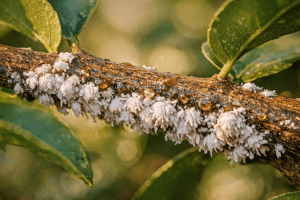
- the fig mealybug (also called fig mange): these are small, gray-brown insects that feed on plant sap by attaching firmly to leaves, branches and trunk. Oval in shape, their distinguishing feature is a waxy covering, making them look like small whitish or brownish scales, similar to tortoiseshells. In addition, mealybugs emit a sticky substance that can cause fumigation (a black mold) to develop on leaves, creating a dark, sticky appearance.
- the fig borer : this is a small brown insect whose larvae feed on the wood of the plant, digging tunnels in the trunk and branches. To recognize them, it is necessary to check if the plant has small holes in these areas, with a fine powder escaping. Affected areas may also appear dry or discolored.
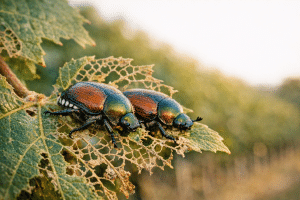
- the black boll weevil: this is a small black beetle that can pierce the plant to lay its eggs inside the roots and in the collar. When the eggs hatch, the larvae begin to feed on the sap of the plant causing it to weaken and die. Again, the presence of small holes in the bark is a clear sign of infestation, which can also lead the plant to develop scars or deformities on trunk.
- the fruit fly : similar in appearance to a small yellow-green or light brown fly with dark stripes on its back, this insect does not attack the plant but its fruit, causing it to rot. It in fact lays its eggs under the skin of the fruit so that when they hatch the larvae can feed on the flesh. In this case, therefore, the signs of infestation are to be looked for on the fruit, which will show small holes and appear bruised, soft and rotten. Also if opened, it is possible to find white or yellowish larvae inside them.
Once the pest is recognized, how to go about eradicating it? The preferable solution is to start by intervening with natural methods such as manual pest removal (in the case of light infestations) the use of natural treatments such as neem oil or a nettle macerate, the use of traps or the introduction of natural predators such as ladybugs. The use of chemical pesticides should be reserved only for severe infestations that cannot be controlled by natural solutions.
How to recognize and combat fig moth
Among the various pests that can attack the fig plant, the moth deserves a separate paragraph because it represents a rather widespread and dangerous threat to the fig. A member of the lepidopteran family, its life cycle has four stages: egg, larva, pupa, and adult, and the most dangerous stage for the plant is the larval stage. In fact, the adult female lays her eggs on the leaves, and the larvae, once hatched, erode the upper page of the leaves, forming galleries. Subsequently, the larvae pupate in the soil, completing their biological cycle.
So we are dealing with a phyllomining insect (which feeds on the leaves), and therefore to identify a moth infestation it is sufficient to observe this very part of the plant, which will show erosions and “tunnels” dug in the upper page. In addition, the use of traps (pheromone or colored) is the most effective method of monitoring the infestation of these pests, going to identify the adults.
To combat the fig moth in addition to the remedies already seen against other pests, one of the most effective and safe methods is the use of a solution based on Bacillus thuringiensis (Bt), a bacterium that acts as a biological insecticide, to be sprayed on the leaves during the larval stage. It is very important to treat the plant at the right time, that is, when the larvae are feeding on the leaf, because this bacterium produces toxic proteins that are activated in the digestive system of the larvae when they ingest them. Bacillus thuringiensis is a targeted treatment that is safe for beneficial insects such as bees and non-harmful butterflies, and leaves no chemical residue on the fruit, making it particularly suitable for organic farming.
Fig diseases: all the remedies to cure them
Now that we have explored together the main diseases that can affect figs, let’s look at how to intervene. The first step is to understand what type of disease we are dealing with. Once we have identified the nature of the disease, we can take targeted action to treat it. Here is a summary of remedies to take:
-
Fungal treatments.
: Use specific antifungals to treat fungal diseases. Treatments should be applied promptly, preferably early in the season or when the first signs of infection appear. -
Pruning and removal of infected parts
: Prune and remove affected leaves, branches and fruit in a timely manner to prevent spores from spreading. Infected parts should be destroyed (preferably burned). -
Improving environmental conditions.
: Avoid water stagnation in the soil, improve drainage and ensure good air circulation between plants. This helps prevent moisture that promotes fungal growth.
Improved drainage
: Compact soils or soils with poor ventilation hinder nutrient uptake and promote fungal growth. It is essential to improve soil structure to promote drainage.
Plantvoice, the sensor technology that helps prevent fig diseases
As they say, prevention is better than cure, even in agriculture. Being able to constantly monitor the health of the plant is essential to take timely action at the onset of early signs of the disease, preventing it from spreading further and compromising the health of the entire fig tree.
Fortunately, technology comes to our aid today: Plantvoice has developed an innovative sensor to monitor plant sap in real time, improving crop health by reducing pesticide and water use. It is a toothpick-sized phytocompatible device that is inserted directly into the plant stem and once it captures internal physiological data, it sends it to an artificial intelligence software in the cloud. Through customized algorithms, the software is able to analyze this data to provide detailed information about the health of the plant, allowing farmers to intervene early in the event of disease, for example: thanks to real-time monitoring of the plant, similar to an electrocardiogram, it is possible to intervene at the first signs of infection, stopping it in the bud.