Asparagus ( Asparagus officinalis ) is one of the most profitable perennial vegetable crops in Italy. Proper asparagus planting planning is a long-term investment that leaves no room for error, even from the initial stages.
In this guide, we will examine each stage of cultivation in detail: from soil preparation and the choice of propagation material, to pest management and harvesting techniques for obtaining commercial-quality shoots.
Physiology and vegetative cycle
Asparagus alternates an active vegetative phase between spring and autumn with a winter rest period during which the above-ground part dries out completely, while the underground rhizome (the so-called “leg”) accumulates nutritional reserves —carbohydrates, proteins, vitamins—that will be used to produce shoots the following season. This mechanism has a direct and very important consequence for the technician: the shoots do not grow thanks to ongoing photosynthesis, but consume exclusively the reserves accumulated in the previous vegetative phase . This is precisely why the moment of awakening is critical : triggered by a minimum soil temperature of 12°C for at least seven consecutive days and an adequate level of humidity , the plant begins to mobilize those reserves without the possibility of replenishing them until the end of the harvest.
Pedoclimatic needs
| Parameter | Optimal value | Notes |
| Weaving | Sandy loam | Avoid clayey and compact soils |
| pH | 6.0 – 7.5 (subacid) | Correct with lime if necessary |
| Soil depth | ≥ 60 cm | The roots explore more than 1 meter |
| Drainage | Optimal | Water stagnation = death of the paw |
| Optimal temperature for shoots | 20°C | Below +2°C damage to emerged shoots |
| Reserve accumulation temperature | 23-28°C | Above 35°C the synthesis is reduced |
| Relative humidity | Average | Avoid environments with persistent stagnant dew |
Asparagus is not a crop that adapts to all conditions : waterlogged soils, even temporarily, are the main cause of early death of asparagus beds due to Fusarium spp . attacks. If the starting soil is mainly clayey, it is necessary to provide artificial drainage or practice growing in raised beds .
Crop rotation
Asparagus cultivation cannot be returned to the same land for at least 5 years . The reason is twofold:
- On the one hand the accumulation of pathogenic fungi , in particular Fusarium oxysporum f. sp. asparagus, F. proliferatum and solani , specific pathogens that build a high inoculum potential in the soil.
- On the other hand, the presence of allelopathic compounds released by the plant itself, which inhibit the growth of new legs.
This is a mistake that many growers make by underestimating the problem: replanting on already colonized soil almost always leads to the failure of the asparagus bed within 2-3 years .
Propagation material: legs or seedlings?
To create a new asparagus planting —or rather, to establish an asparagus bed —you can start with one-year-old shoots from a certified nursery or with 60-70 day-old seedlings grown in trays. Both options have pros and cons :
| Characteristic | Legs | Alveolate seedlings |
| Unit cost | Greater | About 50% lower |
| Phytosanitary guarantees | Minors | Major |
| Mechanical transplant | Not always possible | Yes, with a special transplanter |
| Advance entry into production | Possible | No |
| Resistance to post-transplant water stress | Greater | Minor |
| Optimal plant depth | Easier to reach | Requires attention |
Regardless of your choice, always ask the nurseryman for a declaration of absence of F usarium spp. and Phytophthora megasperma in the material supplied.
Soil preparation and planting
Soil preparation requires planning that begins in the late summer before planting :
- Deep ploughing : 50-60 cm or 30-40 cm with subsoiling at 70 cm, to be carried out at the end of summer
- Surface tillage before planting when the soil is at room temperature. Avoid using a tiller.
- Opening of the furrows : 20-25 cm deep at the base of which the legs or seedlings are placed
The optimal depth of the rhizome buds is 10 cm in mainly clayey soils and 15 cm in looser soils .
How to arrange plants in the field
The recommended planting distances for professional cultivation are:
- 0.30 m on the row
- 1.30-1.50 m between rows (corresponding to 22,200-25,600 plants/ha)
For green asparagus, wider row spacings (150 cm) are recommended to reduce humidity in the canopy and limit rust and stem leaf blight infections .
The varietal choice
Variety choice affects productivity, earliness, shoot quality, and resistance to major fungal diseases. The main hybrids for Mediterranean conditions are:
- UC157 : very early, medium-sized shoots with reddish anthocyanin hues, compact bracts even at high temperatures. Sensitive to rust and stemphyllosis.
- Grande and Atlas : Superior to UC157 in productivity and size, with an approximately 7-day delay in earliness. Better rust resistance.
- Italo : first Italian hybrid for Mediterranean areas, entirely male (homogeneous shoots), high resistance to rust and high productivity.
Where rust and stemphylliosis pressure is historically high , it is preferable to orient oneself towards hybrids with certified genetic resistance , rather than relying exclusively on chemical defence.
Asparagus Fertilization Plan
Asparagus fertilization should be based on a chemical soil analysis performed before planting and repeated every three years. Annual crop removal (production: 10 t/ha of shoots):
| Part of the plant | N (kg/ha) | P ₂ O ₅ (kg/ha) | K₂O ( kg/ha) | CaO (kg/ha) | MgO (kg/ha) |
| Shoots | 32 | 12 | 30 | 4 | 1 |
| Rhizome and roots | 26 | 5 | 21 | 15 | 1,5 |
| Air apparatus | 34 | 7 | 32 | 4 | 1 |
| TOTAL | 92 | 24 | 83 | 25 | 3,5 |
Plant fertilization: how to calibrate contributions
Base fertilization , applied at plowing time, must ensure adequate supply for at least the first three years of cultivation. Recommended doses of phosphorus (P₂O₅), potassium (K₂O), and manure vary depending on soil composition, as determined by pre-planting chemical analysis:
| Land supply | P₂O₅ (kg/ha) | K₂O (kg/ha) | Manure (t/ha) |
| High | 50 | 100 | 50 |
| Average | 100 | 200 | 100 |
| Low | 150 | 300 | 200 |
Organic matter and phosphopotassium fertilizers are distributed during the winter rest ; nitrogen fertilizers are distributed exclusively during the vegetative phase (from the end of the harvest to mid-September) in fractional doses not exceeding 50 kg/ha of N per application.. During the harvesting phase the plant does not absorb nutrients.
Asparagus irrigation: volumes, frequencies, and methods
Irrigation has a direct impact on the quality and quantity of shoots . Localized irrigation systems (under-canopy drip irrigation) are preferable because they reduce humidity in the canopy and limit the spread of rust and stem filiosis.
Indicative volumes per intervention:
- 250 m³/ha for sandy soils (frequency every 3-4 days).
- 350 m³/ha for clayey soils (frequency every 5-6 days).
The total seasonal volume required is 5,000-7,000 m³/ha . When growing crops under tunnels, maintenance irrigation is necessary even during the winter dormancy (100-150 m³/ha) to avoid stress that would result in delays in the production of spring shoots.
Weed Control in Asparagus: When and How to Weed
Weed management in asparagus is critical : the crop is non-competitive for long periods of the year, and perennial weed species — if not controlled in the early years — become virtually impossible to eliminate without damaging the asparagus bed.
No herbicide treatment is permitted during the harvest period. During this period, flame weeding is permitted, which kills weeds with the added benefit of warming the topsoil and accelerating shoot emergence.
Before the spring shoot emergence: Glufosinate ammonium and glyphosate (without a withholding period), Metobromuron (without a withholding period; candidate for substitution: maximum 3 applications/year). Products such as Pendimethalin require at least 60 days before the start of the harvest. It is always a good idea to check the Ministry of Health’s Pesticide Database for other molecules authorized for asparagus. In all cases , annual rotation of active ingredients is recommended: consistently using the same herbicide favors the selection of resistant weeds, making control progressively less effective.
Phytosanitary defense: pathogens and parasites
Weekly monitoring of asparagus beds throughout the growing season is the foundation of any effective pest management program. It’s important to remember that any damage to summer vegetation directly impacts the amount of reserves stored in the rhizome and, therefore, the following year’s production. The following table summarizes the main pests in the Mediterranean environment, along with the appropriate interventions:
| Adversity | Agent | Type of intervention | Active ingredients |
| Rust | Puccinia asparagus | Chemical at the appearance of the first symptoms, every 10-12 days if T average< 25°C | Copper oxychloride, Copper hydroxide, Cyproconazole, Triforine |
| Stemphilosis | Stemphylium vesicarium | Chemical; remove the aerial part in autumn | Copper oxychloride, Bordeaux mixture, Copper hydroxide |
| Fusariasis | Fusarium oxysporum f. sp. asparagus, F. proliferatum, F. solani | Mainly agronomic; no effective chemicals in the field | Benomyl/Carbendazim only for pre-implantation leg tanning |
| Bad wine | Rhizoctonia violacea | Agronomic: crop rotation, uprooting of diseased plants | — |
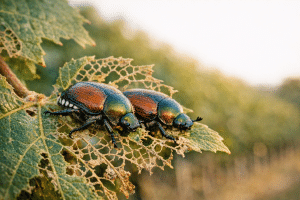
| Criocera | Crioceris asparagus and C. duodecimpunctata | Chemical only in case of high presence | Deltamethrin (only after harvesting the shoots) |
| Asparagus aphid | Brachycorynella asparagi | Chemist at the appearance of the first dwarfed stems | Pyrethrins |
| Thrips | Thrips tabaci | Chemical (intervene before harvest, respect waiting periods) | Check registered pa |
Note: For all active ingredients listed, always check their current registration status in the Ministry of Health’s Plant Protection Database before use.
When and how to harvest shoots to maximize quality
Asparagus spears are harvested when they reach a height of 17 to 25 cm , cutting them at ground level. A well-managed asparagus bed produces, starting in the third year, approximately 10 t/ha of commercial product in about 60 days of harvest (200-400 kg/ha per single harvest).
Within a few hours of being cut, the shoots must be taken to the warehouse: they must be stored at 4-6°C , with immediate hydrorefrigeration and temperatures of 2-4°C until they are marketed , with a maximum shelf life of 8-10 days.
Commercial categories (EU Delegated Regulation 2023/2429):
The commercial quality of shoots depends not only on cultivation techniques, but also on proper classification during processing . The three categories established by the regulations differ in shape, color, tip closure, and uniformity of size:
- Extra Grade : Straight, completely green asparagus with a tightly closed tip. The minimum size is 3 mm, with a maximum difference of 8 mm between the thickest and thinnest spears in the same batch.
- Category I : Well-formed asparagus, at least 80% green, with a pointed tip. A slight curvature is permitted. The minimum size is 3 mm, with a maximum deviation of 8 mm.
- Category II : Asparagus that may be less regular in shape and more pronounced in curvature, green for at least 60% of its length, with a less pointed tip. The minimum size remains 3 mm, but uniformity between shoots from the same batch is not required.
FAQ – Frequently Asked Questions About Growing Asparagus
1. Why does the asparagus field produce less and less each year even though it appears healthy?
The most common cause is an excessively long harvest period compared to the available nutrient reserves in the rhizome. Each year in which more is harvested than the plant accumulated in the previous vegetative phase, the plant progressively suffers depletion. Also check for summer foliage diseases (rust, stemphylliosis) that reduce photosynthetic capacity and thus the accumulation of reserves.
2. When is it correct to start harvesting after planting seedlings in plugs?
With plug-shaped seedlings, the first limited harvest (10-20 days, 2-5 t/ha) can take place in the third year , only if the second-year vegetation was vigorous (≥ 30 stems per plant, average height 200 cm, diameter 12-25 mm). Full production begins in the fourth year and beyond. Harvesting seedlings earlier in the second year compromises the longevity of the plant.
3. What is the correct management of vegetation at the end of the season?
At the end of the growing season, when the foliage is completely dry (October-November), the above-ground portion should be cut to ground level and removed from the field for burning or disposal. Leaving vegetation in the field significantly increases the potential for inoculation of rust, stem filiosis, and animal parasites ( aphid eggs, leaf beetles). The benefit in terms of organic matter does not offset the phytosanitary risk.
Plantvoice supports agronomists and technicians in crop management with monitoring and agronomic analysis tools.