The issue of aphids is a major concern for farmers. Therefore, it’s essential to check and monitor all crops frequently to prevent and combat the problem. Aphids are responsible for damaging and weakening plants.
In this article, we’ll explain how to recognize them, what causes them, and what techniques to adopt to protect our plants.
What are aphids?
Aphids , also known as ” plant lice ,” are small, soft-bodied insects, with or without wings. These parasites damage plants by sucking sap from plant tissue. This is because they possess a specific saliva that causes plant malformations.
It is important to know that there are different species of aphids, distinguishable by color:
- Black aphids , mainly found on vegetables and legumes, but also on fruit trees and beets.
- Green aphids , especially common in Italy, attack fruit trees, vegetables and roses (especially tender shoots, tops and young leaves).
- Less common are white and grey aphids .
These parasites thrive in warm, mild temperatures (between 18 and 26°C) and prefer dry environments. For this reason, it’s important to keep in mind that when the climate becomes cooler and rainier, their activity decreases , and the plant is less susceptible to attack. Fertilizing excessively high levels of nitrogen can also lead to the arrival of aphids. An overabundance of this mineral increases the plant’s vigor, producing young branches that are more susceptible to attack. Secondly, excess nitrogen promotes unbalanced vegetative growth , to the detriment of flowers and fruit.
These insects are vectors of various diseases that can affect plants, such as “ citrus tristeza ”, which affects oranges , and are also the main cause of various pathologies that can damage pomegranates .
How to recognize aphids on plants
There are many signs that indicate the presence of aphids on plants. Among these, the appearance of the leaves is the most obvious indicator. When these insects begin to feed on the sap , the leaves tend to fold , curl, or deform . This is due to the aphid bites, which disrupt the regular circulation of the sap, progressively weakening the plant.
Another indicator is honeydew . Aphids excrete a sticky substance called honeydew. This is a sugary secretion composed of their waste products. This then settles on the leaves and branches of the plant, making them sticky and shiny. Honeydew also creates the ideal environment for the development of sooty mold , a black fungus that settles on the leaves. This layer limits photosynthesis and further worsens the plant’s condition. Sooty mold, also known as sooty mold , is also among the main diseases of aromatic plants .
The third indicator refers to the plant’s slowed growth , which occurs because aphids deprive it of vital resources. This phenomenon is particularly evident in young plants.
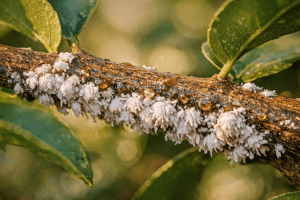
In addition to these signs, these sucking parasites can be recognized by the colonies they form on the plant . As described above, small green, black, white, or gray insects can be seen. Their presence in large numbers indicates an advanced infestation and requires immediate intervention.
Furthermore, there is a symbiotic relationship between the presence of aphids and ants : the latter use the sap produced by the aphids and, in exchange, protect their eggs. This creates insect farms that aggravate the infestation of our plants.
Why it’s important to avoid chemical pesticides
The use of chemicals is harmful to the environment, as they are toxic from both an ecological and human perspective. In fact, the former severely damages the environment in several ways: Soil, groundwater, air. In the second case, consider the future human beings who will eat fruits and vegetables grown on those lands, which will therefore be contaminated .
The choice to use chemical pesticides is also negative because it is fatal to beneficial organisms such as ladybugs, hoverflies, and bees. The first two feed on aphids, while bees are essential for plant pollination; therefore, keeping them alive is strongly recommended. We can therefore define them as the plant’s ” natural allies .” Finally, the risk of aphid resistance to the active ingredients of pesticides must be taken into consideration.
Aphid prevention and control strategies
There are several methods to combat aphid growth on our plants. For example, increasing the number of their natural predators : ladybugs, parasitoid wasps, lacewings, and bees . To protect them, it’s essential to correctly identify them:
- Adult ladybugs are easy to spot, but their larvae are not, so they often go unrecognized and risk being eliminated. Both adults and larvae feed on these pests: a single ladybug can eat dozens of aphids a day. Ladybugs are also adaptable to different crops and environments, and can be easily purchased and released directly into affected areas. After initial introduction, they often manage to maintain a balance between prey and predators on their own.
- Hoverflies can be confusing, as they look similar to wasps, but they are actually small, harmless flies that are essential against aphids.
- Parasitoid wasps are small insects, called “parasitoids” because they lay their eggs inside harmful insects. Their larvae grow inside the host insect, killing it. They are highly selective: they only target aphids, without harming other species. Their action is simple and effective: they lay their eggs inside aphids, and the larvae, as they grow, eliminate them. This ensures constant control of aphid populations.
- Lacewing larvae, also known as ” aphid lions ,” are a cross between an earwig and a ladybug larva. Both have well-developed mandibles and an elongated, slightly spiny abdomen. They can eat up to 200 aphids a day, helping to quickly reduce infestations without harming the environment. Another positive aspect is that they also attack mites, scale insects, and other pest eggs, thus offering broader protection to crops.
It is therefore essential to promote biodiversity , because the more diversified the environment, the higher the probability that there are natural predators of aphids.
Furthermore, balanced fertilization , without excess nitrogen, is certainly an effective prevention strategy against aphids.
An alternative is also the use of natural extracts such as nettle macerate , potassium soft soap or neem oil , which are used as natural insecticides and repellents to defend plants from harmful insects, including aphids.
Finally, biological control methods are certainly very effective. Among these, we recall chromotropic traps .
All these practices, combined with constant monitoring of plant health, are essential to prevent the formation of aphids.
The Role of Technology: Plantvoice for Plant Monitoring
Given the observations listed above, constant monitoring is an essential strategy, both for implementing effective prevention and for intervening quickly to eliminate aphids and other harmful insects.
From this perspective, Plantvoice is a more than strategic ally : its technology is designed to identify a plant’s needs. It is a phytocompatible device, about the size of a toothpick, which is placed inside the plant’s stem. The system then provides the survey data. This cutting-edge technology monitors the plant’s overall health . It has been patented in Italy, Europe, the United States, and all major international markets.
FAQ – Frequently Asked Questions about Aphids
- Why do aphids prefer to attack some plants over others?
Aphids prefer young , growing plants rich in nitrogen , such as tender shoots and fresh leaves. Some plants emit chemicals that attract them, while mild temperatures and dry conditions favor their proliferation.
- How can I tell if my plant has an aphid infestation?
The main signs are curled or deformed leaves , sticky honeydew and sooty mold, slowed growth, and colonies of small, colored insects (green, black, white, or gray). The presence of ants can also be an indicator.
- Why is it not recommended to use chemical pesticides against aphids?
Chemical pesticides damage the environment (soil, air, water), contaminate food, and kill beneficial insects such as bees, ladybugs, and hoverflies , which are essential to the ecosystem’s balance. Furthermore, aphids can develop resistance to the active ingredients.
- What natural remedies can be used to eliminate aphids?
The most effective remedies against aphids are:
- Nettle macerate.
- Soft potassium soap.
- Neem oil.
They are natural insecticides that respect the environment and protect beneficial predators. Promoting biodiversity and a balanced fertilization regime also helps prevent their appearance.
- How are color traps used to control aphids?
Color traps attract aphids with bright colors, such as yellow, and trap them on a sticky surface. They should be placed near vulnerable plants and monitored regularly for infestation. They are a simple and effective method for controlling aphids without pesticides.
Take care of your plants with Plantvoice .