


Growing fruit trees is not easy, as their management presents constant threats : from fungal diseases to pest attacks, from water stress to temperature changes that compromise productivity and crop quality. Among the most effective and sustainable preventative strategies is natural mulching , an extremely functional technique.
In this article, we’ll explore its application, benefits, and pitfalls to avoid for sustainable and healthy crop management.
What is natural mulching and why is it essential?
When looking at a forest, we rarely find completely bare ground. Fallen leaves, twigs, and plant debris spontaneously form a protective layer that keeps the soil fertile , fresh, and biologically active . Natural mulching aims to replicate this very mechanism, as it consists of covering the soil around plants with organic and mineral materials , creating a covering with numerous protective functions .
This practice initially developed in arid areas to conserve moisture, and later evolved to become an essential tool for disease prevention . In fact, this strategic agronomic intervention provides several beneficial effects for the plant:
- It acts as a physical barrier between the soil and the above-ground parts of the plant, protecting them from fungal and bacterial pathogens. For example, during rains, it intercepts infectious spores and propagules that reach leaves, branches, and fruits.
- Regulates soil moisture and temperature : in summer, it keeps roots cool, preventing overheating, which stresses the plant and makes it vulnerable. In winter, mulching protects against frost, safeguarding the root system and creating an environment less favorable to disease.
- It protects against erosion in hilly areas or on sloping terrain, where intense rainfall can wash away the surface layers richest in organic matter, impoverishing the soil.
- It reduces water requirements , as exposed soil facilitates evaporation and increases plant transpiration. Mulch acts like a sponge during rainy periods, promoting better water absorption.
- It prevents soil compaction , as clayey and calcareous soils tend to become compact and form a surface crust after rain, preventing proper aeration of the roots.
- It protects the soil from light , preventing the emergence of weeds.
- It enriches the soil because, as organic matter decomposes, it turns into fertile humus. This process gradually releases nitrogen, phosphorus, potassium, and trace elements, improving fertility.
- Prostrate plants , such as strawberries, cucumbers and melons, do not come into contact with the ground, but rest on the mulch material , remaining clean and protected.
How mulching prevents fruit tree diseases
A protective barrier against fungal pathogens
Fungal diseases represent a major threat to crops: downy mildew , scab, and anthracnose are all favored by humidity and the dispersal of spores through water . Mulching acts as a physical screen that prevents splashes of water from lifting infected material from the soil during rainfall. This strategy is particularly effective during rainy periods, when climatic conditions favor the onset of infections. For some apple and olive diseases, where they can be spread by splashes of rain, preventive effectiveness can be crucial . Furthermore, keeping the basal parts of the plant dry and well-aerated also prevents secondary infections that develop in the presence of persistent humidity.
Protection of the collar from root diseases
The base of every tree and shrub is the most vulnerable point , as some of the most dangerous diseases, both for the trunk , such as bark canker, and for the roots, such as root rot , appear here. Mulching , if applied correctly, prevents these risks by using organic materials to prevent the accumulation of moisture around the base of the trunk, and mineral mulches promote local drainage.
Weed Control
Numerous virus-carrying insects, such as aphids, scale insects, and whiteflies, can establish themselves among weeds. These transmit pathogens to cultivated plants, and proper mulching can significantly reduce weed growth by depriving these vectors of their natural habitat. Covering the soil prevents sunlight from reaching dormant seeds, blocking their germination. This effect lasts throughout the growing season with a single application, reducing the need for chemical herbicides.
Maintaining clean and healthy fruit
Another often overlooked benefit of mulching concerns the health of the fruit . Plants with low branches and prematurely fallen fruit represent a constant source of pathogenic microorganisms. This contact can promote botrytis (gray mold) infections, soft rot, and other post-harvest diseases that compromise the shelf life of the product. The presence of a mulch layer creates a clean barrier between the fruit and contaminated soil , maintaining healthy production . This aspect is especially essential for plants like strawberries , where the fruit can touch the ground during development.
The best materials for disease prevention
Selecting mulch material is an important agronomic decision, and it requires considering the specific needs of the crop species, climatic conditions, and management objectives . Each case has different characteristics, so it’s essential to understand the benefits of certain materials for plants:
| Material | Benefits for plants | Recommended thickness | Attentions |
| Pine bark | Slow decomposition, acidifying effect for acid-loving plants, progressively enriches the soil | 5-8 cm | Not suitable for roses, prefers semi-shaded areas |
| Hay | Economical, maintains balanced humidity, gradual decomposition | 5-7 cm | Check for a total absence of weed seeds |
| Mature compost | Immediate nutritional intake, improves structure and fertility | 5-7 cm | ONLY when fully ripe, avoid contact with young stems |
| Volcanic lapilli | Optimal drainage, virtually unlimited shelf life, does not acidify | 10 cm | It does not provide organic nutrients, it requires separate fertilization |
| Dry leaves | Free, excellent winter frost protection | 8-10 cm | Use only healthy, pathogen-free leaves |
| Wood Chips/Shavings | Long-lasting protection, wind resistance | 7-8 cm | Add nitrogen fertilizer before application |
It is then important to specify which materials should be avoided , despite their convenience, as they can cause damage:
- Fresh cut grass : It tends to ferment rapidly in hot, humid conditions, encouraging the growth of mold.
- Fresh, uncomposted sawdust : as it decomposes, it removes nitrogen from the soil, causing yellowing of leaves and slowed growth.
- Materials containing viable seeds : carry new weed infestations.
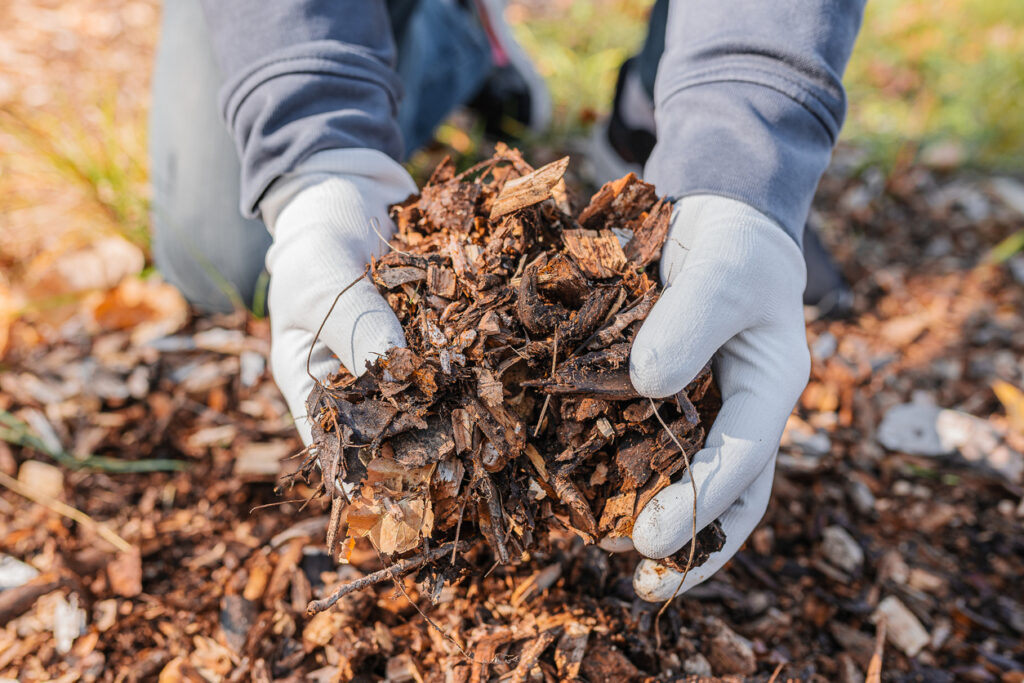
Regarding the amount of material to use, it’s important to consider that you need approximately 10 liters of bark per square meter for each centimeter of thickness . Furthermore, the effectiveness of mulching also depends on the application technique . Here are the strategies to follow:
- Soil preparation : Before laying the mulch, it’s important to completely remove any weeds and loosen the soil to promote aeration and even out any depressions where water could accumulate. Before laying the mulch, it’s important to irrigate the soil to promote adhesion of the materials.
- Distance from the trunk : For large trees and shrubs, it’s essential to keep mulch at least 20-25 cm from the trunk. This is because the accumulation of moist organic material in direct contact with the bark creates ideal conditions for the development of pathogenic fungi that cause rot. Furthermore, contact with the trunk can attract potentially harmful insects.
- Thickness : For lightweight materials, a 5-7 cm layer is recommended, while bark and mature compost require a thickness of 5-8 cm. Volcanic lapilli can reach up to 10 cm. Exceeding the recommended threshold impedes proper oxygen circulation to the roots, promotes carbon dioxide accumulation, and creates conditions for mold and pathogen development.
- Application timing : It is carried out in spring (March – April), when the plants require more water; and in autumn (October – November), in preparation for winter.
- Long-term maintenance : Mulching requires periodic attention, as organic materials gradually decompose, reducing the thickness of the protective layer. It is recommended to add 2-3 cm of fresh material every year to maintain its effectiveness.
Common mistakes in growing
| Mistake | Consequence | Correct solution |
| Mulching in contact with trunk/collar | Collar rot, caused by insects that damage the wood |
Maintain a minimum distance of 20-25 cm from the trunk |
| Too thick layer | Suffocation of plants due to difficulty for water and oxygen to reach the roots |
Respect a thickness appropriate to the material and the plant |
| Using fresh grass or damp materials | Fermentation and development of high temperatures that damage plants | Before use, let the cut grass dry for a few days in the sun. |
| Application on frozen ground | Mulch holds the cold in the soil and hinders spring warming. |
Avoid mulching in winter and early spring, wait for complete thaw |
| Contaminated materials | Introduction of infected weeds into the soil | Make sure that the materials do not contain viable seeds and have not been treated with pesticides |
Integrated disease management in orchards: an innovative solution
Integrated pest and disease management (IPM) is currently the gold standard for sustainable fruit growing . This approach encompasses a range of pest control techniques and the adoption of appropriate measures to prevent the development of harmful organisms . In Europe, farms are required to implement IPM techniques.
Natural mulching is part of this approach, as it represents one of the preventive agronomic techniques recommended by legislation. The European Commission has developed a database with approximately 1,300 examples of IPM practices . These include soil cover and habitat management techniques to promote beneficial organisms.
FAQ
- When is the best time to mulch fruit trees?
The best times are fall (before the cold arrives) and late spring (late April-May). Avoid winter and early spring, as the soil is still cold; therefore, mulch retains the cold and slows the soil’s warming.
- How often should mulch be renewed?
For organic materials such as straw and bark, it is advisable to add 2-3 cm of material each year to compensate for natural decomposition and maintain the effective thickness.
- Can mulch attract pests or harmful insects?
If applied too close to the trunk or with fresh, moist materials, mulch can attract snails, slugs, and wood-boring insects that prefer humid environments. To avoid this, keep the mulch away from the root collar and use thoroughly dry materials.
- Does mulching acidify the soil?
It depends on the material used. Coniferous bark (pine) tends to slightly acidify the soil and is suitable for acid-loving plants like azaleas, rhododendrons, and camellias. However, it is not recommended for plants that prefer calcareous soils like lavender, thyme, and rosemary.
- Can mulch be used with drip irrigation?
Yes, mulching complements drip irrigation perfectly. However, be careful not to keep the root zone constantly wet, as persistent moisture can promote the growth of pathogens such as Phytophthora.
Monitor the health of your crops with Plantvoice !


