


Fruit plants and agricultural crops can be attacked by a variety of pests, i.e., organisms that exploit their resources to the detriment of health and productivity and generate diseases of the trunk of fruit plants. In Italy and the Mediterranean area, the mild climate favors the presence of numerous pests, from small sap-sucking insects to defoliating caterpillars, from microscopic mites to soil nematodes. These organisms can cause extensive damage to orchards and crop fields, compromising the quality and quantity of crops. Knowing the major pests, their life cycle and symptoms of infestations is essential to effectively manage them. In this guide, written with a technical and professional slant, we will analyze the most common categories of pests, their biological cycle, the damage they cause, and prevention and control strategies-including innovative plant monitoring solutions such as PlantVoice-ultimately providing practical advice for sustainable pest management in professional and amateur agriculture.
Classification of major crop pests
Scientifically speaking, plant pests belong to different zoological groups.
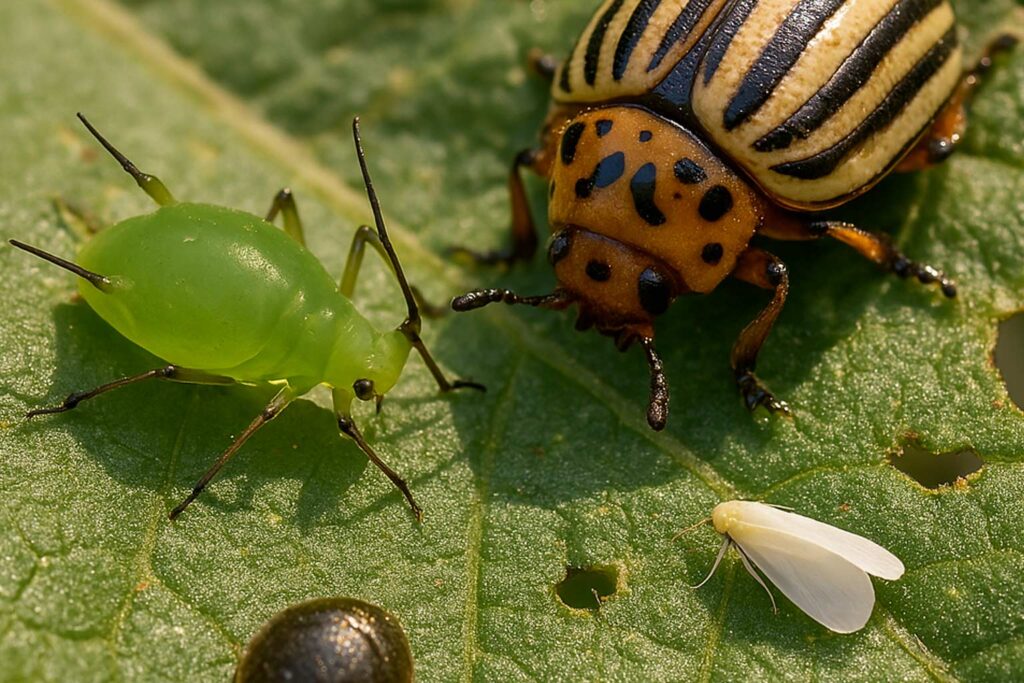
We can divide them into a few main categories:
-
Phytophagous Insects: These are the most numerous animals harmful to cultivated plants. They belong to various orders:
- Rhynchnotes (order Hemiptera): include Aphids, Mealybugs, Psyllids, Aleurodidae (whiteflies) and Bugs. These insects are largely sap-suckers; they possess a stinging-sucking mouthparts with which they pierce plant tissues (leaves, young shoots, fruits) to feed on the sap. Examples: aphids (such as Aphis pomi on apple trees or Myzus persicae on peach trees) and mealybugs (such as Saissetia oleae on citrus and olive trees, or the cottonwood mealybug Planococcus citri). Bugs also belong to this group: for example, the Asian bug (Halyomorpha halys) is an invasive rincote that is causing serious problems for Italian orchards.
- Lepidoptera: butterflies and especially moths and carpocapse, whose larval stages (caterpillars) attack leaves, fruit or wood. Typical examples are the Apple Apple Moth(Cydia pomonella), the Eastern Peach Moth(Grapholita molesta), the Tomato Moth(Tuta absoluta) and the Vine Moth(Lobesia botrana). These insects are often carpophages or leaf miners: the larvae dig tunnels in the fruit or leaves.
- Coleoptera: include the beetles and plant beetles. A prime example is the potato doriphora(Leptinotarsa decemlineata), a yellow-and-black striped beetle that defoliates potatoes and other Solanaceae. Other harmful beetles include the otiorhynchus (Otiorhynchus spp.), which gnaws the leaves of fruit and ornamental plants, and the red palm weevil(Rhynchophorus ferrugineus), which attacks ornamental palms (although the latter does not affect traditional fruit plants, it is an example of a relevant phytophagous beetle in the Mediterranean area).
- Diptera: phytophagous flies and midges. The best known is the Mediterranean fruit fly(Ceratitis capitata), a small fly that lays its eggs in the ripe fruit of many species (peach, citrus, fig, pear, apricot, etc.). Other harmful dipterans include the Olive Fly(Bactrocera oleae), which specializes on olives, and the Cherry Fly(Rhagoletis cerasi). Some midges such as Drosophila suzukii (small fruit fly) also cause damage to berries and cherries.
- Thysanoptera: thrips, tiny, elongated insects such as Frankliniella occidentalis, which sting flowers and leaves (e.g., on vegetables and fruit trees) causing deformities and can transmit virosis to horticultural plants.
- Phytophagous mites: commonly called “spider mites,” are microscopic arachnids (they are not insects) that infest leaves and fruits. The most common is the common red spider mite(Tetranychus urticae), a polyphagous mite that attacks vegetables, fruit plants (apple, grapevine, citrus, strawberry, etc.) and ornamentals. There are also specific mites, such as the red apple spider mite(Panonychus ulmi) or eriophid mites that cause galls and deformations (e.g., Colomerus vitis on the vine). Phytophagous mites are very small (0.2-0.5 mm), often reddish or yellowish in color, and live in colonies on the underside of leaves, weaving thin protective webs.
- Phytoparasitic nematodes: these are microscopic soil roundworms, often invisible to the naked eye (a few millimeters long). They attack the root system of crops, causing decay and poor growth. Galls nematodes (genus Meloidogyne) cause galls and knots on the roots of vegetables (tomato, zucchini, etc.) and young fruit trees, hindering water and nutrient uptake. Other nematodes such as Pratylenchus (root lesioners) or Heterodera (cyst nematodes) affect cereals and other agricultural crops, causing yellowing and yield declines.
- Other Animal Pests: although insects, mites and nematodes are the main ones, other organisms that can harm cultivated plants should not be forgotten. These include gastropod Mollusks (snails and slugs) that gnaw leaves and fruits in contact with the soil, especially in horticulture; some rodents such as voles and field mice, which gnaw on roots or bark of young trees; and even some frugivorous birds or bats that may feed on fruits (not pests in the strict sense, but considered agrarian “adversities”). In agriculture, however, when we talk about “pests” we almost always refer to phytophagous insects, mites and nematodes, which are the subject of specific pest defense strategies.
Each group of pests has its own biological characteristics and requires targeted management methods. In the following sections we will take a closer look at the biological cycle of some of the most common and damaging pests, and then move on to damage and control techniques.
Biological cycle of the most common parasites
Knowing the life cycle of a pest-that is, the transformations it undergoes from the moment it is born until it reproduces and the next generation-is essential for identifying its weaknesses and choosing the right time to intervene. Below we describe the life cycle of some pests emblematic of our areas.

Mediterranean fruit fly(Ceratitis capitata):
this small Dipteran (about 5 mm in length) is one of the most feared pests of Mediterranean fruit growing. Adults are midges with spotted wings and a yellow-orange abdomen. They overwinter mainly as pupae in the soil: the caterpillar (larva) matures and turns into a pupa inside a cocoon in the soil, thus surviving the winter in mild climate zones. In spring the adults emerge and the female begins to sting the ripening fruit to lay eggs under the skin. Each female may lay hundreds of eggs over her lifetime. From the eggs, after a few days, the whitish (wormlike) larvae shuck out and feed on the fruit flesh by digging tunnels.
The larval stage lasts about 1-2 weeks under optimal summer conditions. Upon reaching maturity, the larva leaves the fruit by dropping to the ground and buries itself just below the surface, where it transforms into a pupa. After a pupal phase of one to two weeks (in summer), new adults flicker out, ready to mate and begin the cycle again. In summer, in warm weather, a complete generation can be accomplished in about 3-4 weeks, so there are many annual generations: in southern and coastal regions there can be up to 6-7 generations per year, with an exponential increase in the population towards the end of summer. In cooler areas (northern Italy), on the other hand, the species is present only in summer, carrying out 2-3 generations at most. The limiting factor is temperature: below about 9-10 °C the fly’s biological activity stops. This explains why the insect fails to overwinter in an active form in cold climates, while it thrives in our Mediterranean areas.
Aphids (Plant lice):
aphids include many species (black, green, yellow, floury, etc.) that attack almost all cultivated plants. Take as an example the typical cycle of a pome fruit aphid, such as the green apple louse(Aphis pomi). Many aphids exhibit a holocyclic cycle, with an annual sexual reproduction phase: in autumn, females lay durable eggs on plants (e.g., shiny black eggs accumulated on the twigs of fruit plants), which withstand the winter cold. In spring, founding females are born from the eggs, which initiate asexual generations: throughout spring-summer, in fact, aphids reproduce by viviparous parthenogenesis, that is, the females directly give birth to live nymphs, all identical females to the mother, without the need for mating. This type of reproduction allows for very rapid multiplications: each generation takes only 1-2 weeks to complete, and each female generates dozens of new females. Within a short time, colonies explode in numbers, sucking sap from young tissues. During the summer, winged forms (actere and winged) often appear and disperse to other host plants, sometimes other than the primary plant (many aphids are heterogonous: for example, some overwinter on trees and spend the summer on herbaceous crops). In late summer, changing conditions (photoperiod, host plant exhaustion) induce the production of sexed males and females that mate and lay winter eggs, closing the annual cycle. In areas with a mild climate, some species can also reproduce continuously throughout the year without a sexed phase ( anolocyclic cycle), surviving as adults or neanids on evergreen or greenhouse plants. In general, the aphid cycle is characterized by rapidity and flexibility: many overlapping generations, dispersal ability with winged forms, and adaptation to various hosts. This makes them difficult pests to control unless countered early.
Apple tree hornworm(Cydia pomonella):
also called the “apple worm,” is a Lepidoptera whose damage is well known to pome growers. Its life cycle is a typical example of a carpophagous butterfly.The insect overwinters as a mature larva hidden under bark or in the soil within silky cocoons: in practice, at the end of the season the larva leaves the infested apple and takes shelter to spend the winter in diapause. In spring, the larva pupates and From the pupa emerges the adult (grayish butterfly about 1-1.5 cm wingspan). Adults flicker between late spring and early summer and mate; females lay eggs on leaves or directly on the fruitlets of apple, pear or other host plants. After about 1-2 weeks, the bruchetti rosati, which immediately pierce the skin of the fruit and tunnel toward the center, feeding on the pulp and especially the seeds. The entrance hole on the fruit often exudes gum or dark “rosume” (caterpillar droppings). The mature larva (about 1 to 2 cm long, pinkish in color with a brown head) emerges from the fruit after a few weeks, dropping to the ground or poking under cracks in the bark, where it will pupate. In temperate regions of Italy, the carpocapsa generally makes two generations a year: the first between late spring and mid-summer, the second in late summer with butterflies flying between August and September. In particularly warm areas there may be a partial third generation. The larvae of the last generation, as mentioned, spend the winter in diapause. The carpocapsa cycle is closely linked to the presence of fruit: if the fruit is not there (as in spring), the newborn larvae cannot survive. Therefore, first-generation adults emerge synchronized with the fruit set phase of apple trees.
Eastern peach tree moth(Grapholita molesta):
is a small Lepidoptera tortricidae, related to the carpocapsa but with different behavior. It also overwinters as hibernating larvae in cocoons. In spring, adults (gray butterflies a few millimeters in size) appear as early as April. The female lays eggs mainly on young shoots of peach and other fruit trees (apricot, apple, pear). The first larvae to emerge in spring penetrate tender shoots, burrowing tunnels into growing branches: affected shoots wilt and exhibit the classic “flag” appearance (floppy, burnished shoot hanging down). These attacks on spring shoots weaken the plant and reduce the production of fruiting branches. Subsequent generations (in summer) see the larvae also attack the fruit of peach, plum, apricot and sometimes apple and pear trees, burrowing tunnels into the flesh from the petiole. The Oriental moth can make 3-4 generations per year in Italy (up to 5 in warmer southern areas). The butterflies of each new generation fly every 4-6 weeks or so during the warm months, generating a continuous attack from spring to late summer if left unchecked. The last fall larval generation goes into diapause and overwinters. This polyvolute cycle makes the peach moth very dangerous: large populations can develop in the orchard during the summer if the first flights are not countered, causing severe production losses.

Mealybugs:
Mealybugs are Rhynchus insects with variable cycles depending on the species. In general, many mealybugs overwinter as protected adult females on the trunk or branches (for species that infest wood and branches) or as eggs under the maternal scutum. In spring, the hatching of first-generation neanids occurs: the new hatchlings, called crawlers, are mobile and migrate up the plant in search of a site to settle. Once established, the young mealybugs begin to feed on sap and build their waxy armor (the protective shield, in the case of shield mealybugs, or a cottony covering in the case of mealybugs). After a few molts, the females reach the adult stage: in most mealybugs, the females remain sessile (fixed to the plant and wingless), while the males-present in only a few species-are tiny and winged, living only a few hours to fertilize the females. Many mealybugs common in Mediterranean orchards are able to reproduce parthenogenetically (without a male). For example, the San Jose mealybug(Quadraspidiotus perniciosus) – a dreaded pest of apple, pear and other crops – performs 2-3 generations per year and overwinters as a fertilized female under the shield; in spring, it gives birth to dozens of creeping neanids that colonize the plant. The citrus cotton mealybug(Planococcus citri), on the other hand, lives protected by a white fuzz and can have many overlapping generations in greenhouses or warm climates, infesting fruit and leaves of citrus and vines. In general, mealybugs have multivoltine cycles: from 2 generations/year in cooler areas to 4-5 in warm or protected environments. These cycles need to be known to target the pest at the right time: for example, the mobile neanid (crawler) stage is the most vulnerable to treatments, before individuals protect themselves under waxy shields.
Common red spider mite(Tetranychus urticae):
Let us now turn to a mite. The red spider mite is not an insect, but its cycle is just as rapid. In temperate regions, this mite mostly overwinters as fertilized adult females in diapause, hiding among bark cracks, in dry leaf felt, or in the soil. In spring, the females resume activity, colonize new leaves and begin feeding, poking at leaf cells to suck their juices. After feeding sufficiently, they lay tiny round eggs on the underside of the leaves. Within a few days the eggs give birth to hexapod larvae, which immediately begin to feed and mutate by switching to successive juvenile stages (protonymph and deutonymph, with eight legs). After several molts, the next adult mite occurs in one or two weeks. In midsummer, in hot-dry weather, Tetranychus can complete a generation in as little as 7 to 10 days. This means that under favorable conditions many continuous generations follow one another, exploding the population on a crop if no antagonists or treatments are present. Infested leaves turn yellow and become covered with tiny discolored dots (suckering damage); the mites also produce silky threads forming very fine webs that protect them. Toward the end of summer, increased crowding and climate change induce the appearance of reddish-colored diapausing females, which abandon plants and hide to overwinter. The cycle of the red spider mite is emblematic of how a microscopic pest can quickly become devastating: it only takes a few weeks of dry weather to go from a negligible presence to a massive infestation if no predators or containment treatments intervene.
Potato dorphora(Leptinotarsa decemlineata):
the Colorado beetle is a beetle of North American origin, now naturalized in Europe, particularly damaging to potato, eggplant and sometimes tomato crops. Adults are the characteristic yellow beetles with black stripes on the elytra, about 1 cm long, clearly visible on plants. Their biological cycle in Italy normally involves two generations per year (sometimes three in warmer regions). Adults overwinter in the soil during winter, taking refuge several centimeters deep after dropping and burying themselves spontaneously in late fall. With the first warmth of spring, between April and May, overwintering adults re-emerge from the soil and begin feeding on newly sprouted potato leaves. After mating, females lay clusters of yellow-orange eggs on the underside of potato (or other Solanaceae) leaves. Each female may lay several hundred eggs over the course of a few weeks. After about 7 to 10 days, the eggs hatch and the larvae emerge, looking like small, squat, orange-red caterpillars with black dots on the sides. The larvae are extremely voracious and devour the leaf blade, leaving only the veins: in a short time they can skeletonize entire plants if present in large numbers. The larvae go through 4 stages of development, growing to about 1 cm. Upon reaching maturity, they drop to the ground where they pupate in the soil. After about 2-3 weeks of pupal stage, new adults of the summer generation emerge (in June-July), which in turn mate and may generate a second wave of larvae later in the summer. In September, the new second-generation adults tend to look for overwintering sites, closing the annual cycle. The key element of the Colorado potato beetle’s cycle is its synchronization with the potato crop: it carries out its generations during the potato’s growing season and spends the winter in diapause, waiting for the next planting.
Of course, each parasite has a peculiar cycle. We have described some of the most common ones, but there are many other species with interesting cycles. For example, the Olive Fly overwinters as a pupa in the soil and completes 2-3 generations per year at the expense of olives; the Asian Longhorn Bug survives the winter as a sheltered adult in dry places and in the spring lays eggs on various plants, developing 2 generations per year that affect orchards and horticultural crops; gall nematodes, on the other hand, complete numerous microgenerations within infected root tissues, with mobile larvae migrating through the soil in search of new roots to parasitize. Knowing these biologies helps us predict when the pest will be present and in what form, a crucial factor in preparing appropriate defense measures.
Damage caused by pests to plants and crops
By feeding on plant tissues or taking away sap, pests weaken plants and often cause direct damage to fruits, seeds or other parts of agricultural interest.

Let’s look at the most common types of damage with some specific examples:
- Damage by phytomycetes (sap suckers): aphids, mealybugs, whiteflies and mites mainly cause indirect damage. By inserting their mouth stylets into plant tissues, they take away sap rich in sugars and nutrients. This leads to yellowing, deformation and slowed growth. For example, heavy aphid infestations on peach tree shoots cause curling and distortion of leaves (such as the green peach tree aphid Myzus persicae); affected leaves may curl up and fall early. Mealybugs in turn weaken branches and trunks: the San Jose mealybug produces reddish speckling on fruit of apple and pear trees, making them unmarketable, while on wood it causes cracking and cankers that can lead to desiccation of twigs. An additional side effect of phytomycetes is the production of honeydew: aphids, soft mealybugs and aleurodids secrete abundant sugary excretions (honeydew) that smear the plant, making leaves and fruit sticky. On this honeydew then proliferates a black fungus called “fumaggine,” which fouls and reduces photosynthesis. Think of citrus trees infested with half-peppercorn mealybug or cottonwood mealybug: leaves turn black with fumaggine and fruits lose commercial value. In addition, some sucking insects transmit viruses and phytoplasmas to plants: aphids carry many viruses of horticultural crops (such as watermelon virus or cucumber virus), the citrus whitefly transmits citrus tristessa (a lethal virus), and some leafhoppers spread harmful phytoplasmas (such as flavescence dorée in grapevines, transmitted by Scaphoideus titanus). So the damage is not only direct weakening, but also secondary diseases carried by these pests.
- Damage to fruits and seeds (carpophages): many pests directly affect fruits, rendering them unusable. The Mediterranean fruit fly, for example, lays its larvae in the flesh: the infested fruit initially has only a small puncture on the skin, but soon begins to rot from the inside due to larval galleries and secondary fungal infections. Apricots, peaches, figs, and citrus fruits affected by the fly fall prematurely or are completely soggy inside. Similarly, the olive fly causes galleries to form in olives with rot that damages the flesh and, seriously, increases the acidity of oil produced from infested olives, downgrading its quality. Carpophagous lepidoptera such as carpocapsa and moths penetrate fruits (apples, pears, peaches, apricots) devouring their seeds and part of the pulp: often the first sign is a small hole surrounded by rosura; opening them one finds the caterpillar inside the fruit and traces of excrement. Such fruits either drop before harvest or are unsaleable. In apple trees, carpocapsa attacks can destroy a large percentage of the crop if left unchecked. The Asian fruit bug mentioned earlier also causes damage to fruit: it stings apples, pears, peaches, kiwis and tomatoes to suck out juices, causing hard, necrotic spots on the flesh (so-called “bug spotting”) and deformities called “bruised fruit” or “apple dimpling” in the case of apples and pears. This makes the fruits unsightly and tasteless in those areas, thus unmarketable for fresh consumption.
- Leaf damage and defoliation: chewing pests such as caterpillars (leaf beetles) and beetles can devour entire portions of leaves and shoots. The potato beetle is exemplary in this regard: both adults and, especially, larvae feed on potato and eggplant leaves, skeletonizing the foliage. If the attack is intense, the plants are left without leaf surface and can no longer carry out photosynthesis, stunting tuber growth and leading to total crop loss. Defoliating caterpillars such as the larvae of some moths (e.g., Hyphantria cunea, the Ifantria, or Malacosoma neustria, the grapevine bumblebee) can also strip entire branches of fruit trees, severely affecting plant vigor. Young eastern moth larvae burrow into peach shoots and cause them to shrivel, stripping the plant of new leaves and branches on which to bear fruit. Even small insects such as altiche (ground fleas) on vegetables or oziorrhynchus beetles on vines and strawberries, while gnawing “margarine” the edges of leaves, can slow growth and reduce photosynthetic production under heavy infestations, weakening plants.
- Damage to stems, roots and other organs: some pests pounce on structural parts. For example, yellow rhodilwood(Zeuzera pyrina) is a lepidopteran whose larvae dig tunnels inside trunks and branches of apple, walnut, olive trees, etc., causing decay and risk of breakage. Galls nematodes on roots cause swellings (galls) that hinder uptake, leading the plant to symptoms of wilting and malnutrition, especially in vegetables and young plants: carrots and potatoes attacked by nematodes are misshapen and unsaleable; nematode-affected vines may exhibit stunted growth. Slugs (snails without shells) can also destroy roots, tubers, or bulbs, as well as devour fruits in contact with the soil (strawberries, zucchini). Root damage is often not visible immediately but manifests in weak, chlorotic plants that are easily subjected to water stress because the root system is deteriorated.
In summary, plant pests can affect any organ: leaves, buds, flowers, fruits, seeds, roots, stems. The effects range from a simple decrease in aesthetics (stained leaves, misshapen fruit) to plant death in the most severe cases (e.g., young seedlings attacked by root aphids or undermining larvae in the stem, or trees completely defoliated for several seasons in a row). From the agricultural point of view, the most important damage is often quantitative and qualitative on the crop: loss of weight and number of harvested fruits, reduction of sugar content or extractable oil, presence of insects or larvae in the product, visual defects that prevent its sale. This is why pest management plays a crucial role in maintaining crop profitability.
Prevention and monitoring methods
In modern agriculture, the pest management strategy is based on prevention and constant monitoring, the cornerstone principles of integrated pest management. It is always better to prevent or intercept an infestation early than to have to fight a now exploded invasion.

Below are the main preventive measures and monitoring techniques employed:
- Preventive agronomic practices:
Many pests can be limited by adopting good cultural practices. For example, the crop rotation in the garden and field helps reduce nematodes and soil-specific pests: alternating plants from different families year after year breaks the cycle of specialized pests (a plot infested with solanaceous nematodes could be sown to cereals or legumes the following year, starving the nematodes). Plant intercropping can keep some pests away: planting marigolds (guinea carnations) near vegetables helps contain nematodes in the soil, while aromatics such as basil or tanacetus repel some insects with their odors. Maintainingorchard and vegetable garden hygiene is also crucial: picking and destroying fallen and rotten fruit (potential foci of fruit flies and carpocapsa), removing infested crop residues (e.g., late-cycle vegetable plants full of aphids or powdery mildew, which should be removed), and pruning affected parts (branches with mealybugs or insect eggs) reduces the overwintering population of pests. In orchards, autumn tillage under the canopy can bury or expose to predators many overwintering pupae of flies and carpocapse, lowering spring emergence. In addition, choosing varieties resistant or tolerant to certain pests can avoid problems: for example, some vine rootstocks are tolerant to nematodes, certain tomato cultivars are selected to resist virus-carrying aphids, etc. - Physical barriers and mechanical traps:
A simple preventive approach is to physically prevent the pest from reaching the plant. In small crops and vegetable gardens, the use of insect nets is very effective: fine-mesh nets placed on tunnels or directly on plants protect against flies (e.g., monofilament netting on olive trees against the fly or on stone fruits against Drosophila suzukii), lepidopterans, and insects in general. In the case of olive fly and Mediterranean fruit fly, fabric/nonwoven bags or nets are also used to wrap individual fruits or entire branches, preventing egg-laying in the fruits (a technique adopted on valuable fruits such as mango, kaki, and on organic apples in some cases). For soil pests, summer soil solarization (covering moist soil with clear plastic for a few weeks to raise the temperature and kill nematodes, insects, and soil fungi) can be used. There are also specific barriers: for example, a band of glue around the trunk can block the rise of ants (which breed aphids) or larvae such as oziorhynchus larvae that come up at night to feed on leaves.
Another mechanical method iselimination by hand or with tools: in family gardens, hand-picking caterpillars (such as cabbage beetle larvae on cabbages or Colorado beetle larvae on potatoes) and destroying them can contain the damage. Shaking plants early in the morning to drop insects and then remove them works with some beetles (e.g., shaking out tentredin-infested branches or defoliating caterpillars in a tarp). Water is also a mechanical means: a sharp jet of water on the underside of leaves can dislodge aphids and mites in delicate crops (a useful technique in greenhouses or on ornamental plants). These artisanal methods are feasible on a small scale and favor an ecological approach, suitable for amateur growers.
- Monitoring with attractant traps:
To detect the presence of pests early enough to intervene only when needed (according to the principle of integrated pest management), monitoring traps are used extensively. These traps take advantage of various types of attractants to capture a sample of pests, signaling their occurrence:
- Chromotropic traps: these are adhesive panels of a specific color that attracts certain insects. The most common are yellow adhesive tags, which are very effective in attracting aphids, whiteflies, leaf miners and many other insects that are naturally attracted to bright yellow. They are hung in greenhouses or between plants, and by checking them periodically, the first trapped individuals can be seen, a sign that an infestation is in progress. There are also adhesive blue traps specifically for thrips, which respond more to the color blue.
- Pheromone traps: exploit sex pheromones emitted by insects to attract conspecifics. They are widely used for lepidoptera: for example, pheromone traps are installed in the orchard for apple carpocapsa, peach moth, anarsia (another peach moth), vine moth, etc. The pheromone capsule mimics the scent of the female and attracts males inside the trap, which is often lined internally with glue or has a mechanism to trap insects that have entered. Pheromone monitoring makes it possible to determine the beginning of a generation’s flight (e.g., the first capture of carpocapsa males is observed and this signals that adult flight is beginning, which is useful for then calculating the timing of ovideposition and larval emergence). In addition, by counting captures weekly, the population density is estimated and an assessment is made of whether intervention is needed.
- Food traps and scent attractants: some species respond well to food attractants. For example, for fruit fly and olive fly, traps containing protein or ammonia substances (such as protein hydrolysate, or simple mixtures such as water, sugar and yeast or ammonium bicarbonate) are used to attract mainly females in search of protein food needed for egg maturation. Once inside, the flies drown in the solution or get stuck. Bottle traps with apple cider vinegar or beer are also used by hobbyists to catch small fruit flies (Drosophila suzukii) or wasps that spoil grapes: the insect enters attracted by the fermented odor and then drowns in the liquid.
- Light traps: less selective but sometimes used in greenhouses or warehouses, these are UV lamps with sticky panels or electrical systems that attract and kill nocturnal flying insects (e.g., moths, moths). In the open field their use is limited because they would attract insects even from afar, including beneficial ones, creating possible imbalances.
Monitoring by traps allows the farmer to have early warning. For example, discovering 2-3 carpocapsa adults in pheromone traps may suggest preparing larvicidal interventions 7-10 days later (egg incubation time). Or, seeing an increase in olive fly catches in late September indicates a risk to oil quality and therefore the need to harvest early or treat.
- Visual monitoring and field sampling:
In addition to traps, it is important to inspect plants regularly (this is where PlantVoice comes in). An experienced farmer or plant protection technician will periodically check the foliage, back of leaves, shoots, and fruit, looking for signs of pests: aphid colonies at the apex of shoots, red spider mite oviposits on the back of leaves, lepidopteran oothecae under leaves, small ovidipation stings on drupes (a symptom of fly), rosures on leaves, etc. This visual monitoring can be done on a random basis (e.g., observe 100 selected leaves in various parts of the field and count how many have the presence of eggs/larvae of a certain pest: this gives the % of infestation). There are also more elaborate statistical sampling schemes for deciding whether one exceeds the economic threshold of damage-that is, the level of infestation above which it makes economic sense to intervene. For example, in an apple orchard one might fix that treatment against mites is justified if more than 30 percent of the examined leaves have active spider mite colonies: below this threshold, perhaps natural predators contain the problem and unnecessary intervention is avoided. These threshold criteria are an integral part of integrated pest management, which aims to reduce chemical interventions to what is necessary. - Innovative monitoring systems:
Advanced pest monitoring technologies have been added in recent years:
- Smart traps with sensors or cameras: some companies offer pheromone or chromotropic traps equipped with digital cameras and connection, which periodically photograph captures and send the images to automatic insect recognition software. This allows the farmer to remotely monitor (via app or computer) how many and which insects have been caught, without having to physically inspect each trap. Some smart traps count individuals and generate automatic graphs of pest flights, alerting when a certain threshold is reached.
- Predictive models and agro-meteorological networks: by cross-referencing weather data (temperature, humidity, rainfall) with pest biological information (development curves as a function of temperature), decision support systems (DSS) can predict biological stages. For example, through thermal summation models (degree days), one can estimate when the hatching of carpocapse eggs or the peak flight of the second generation moth will occur. Many digital farming platforms offer these services: the farmer enters the date of first capture or start of flight, and the software, based on temperatures recorded in the area, calculates population trends and suggests the optimal timing for interventions. This helps prevent damage by hitting the pest at the most vulnerable time.
- In-plant sensors and remote sensing: which we will discuss in detail later (e.g., with the PlantVoice system), are the frontier for picking up stress signals in the plant before they are visible to the naked eye. Sensors that measure physiological parameters of the plant (sap flow, leaf turgor, leaf reflectance in certain spectral bands) can detect changes associated with an ongoing pest attack (e.g., if a plant is undergoing an intense aphid or mite attack, it will often show a decrease in lymph flow or a different leaf surface temperature). Drones with multispectral cameras are also being experimented with to detect pest-stressed crops from the sky: an abnormally yellowed field sector could indicate an insect outbreak or nematode infestation in those plants.
Prevention is implemented with agronomic practices and barriers that reduce the chances of infestation, while monitoring-traditional and technological-allows one to know when to intervene and often in advance of the appearance of macroscopic damage. An attentive farmer keeps a diary of monitoring and follows local phytosanitary bulletins, supplementing them with observations in the field, so that control measures (which we will look at in the next section) can be applied at the most appropriate and targeted time.
Biological and natural control methods
When a pest exceeds the threshold of tolerance and threatens to compromise the crop, action must be taken. The modern approach favors biological control methods and natural remedies, in the context of integrated pest management that combines effectiveness and sustainability.

Let’s see what options are available to manage pests while reducing the use of synthetic chemicals:
- Natural antagonists (beneficial insects and predators):
In nature, every pest has natural enemies-predators or parasitoids-that keep its population in check. Humans can favor these “allies” or even actively introduce them (inoculative or inundative biocontrol):
- Predatory insects: these are those that devour pests as prey. A classic example is ladybugs: both adults and ladybug larvae (such as Coccinella septempunctata or Adalia bipunctata) feed voraciously on aphids, mealybugs and other small insects
. A single adult ladybug can eat dozens of aphids a day. Similarly, chrysops (Chrysoperla carnea, whose larval stages are known as “aphid lions”) prey on aphids, mites and small caterpillars. Hoverflies, flies whose small snail-shaped larvae prey on aphids, also contribute. Against red spider mites, highly effective are predatory mites such as Phytoseiulus persimilis and Neoseiulus californicus, used mainly in greenhouses on strawberry, vegetable and floricultural crops: these beneficial mites feed exclusively on other phytophagous mites, halving infestations. Other beneficial predators include predatory hymenoptera (such as Polistes wasps, which collect caterpillars to feed larvae, sometimes clearing orchards of defoliating larvae) and forficulae (insects also called “earwigs” or “tongs”), omnivores that in orchards can eat aphids and other insects on plants.
- Parasitoid insects: these are insects (often small Hymenoptera) that lay their eggs in or on other insects, and the larvae that emerge develop at the expense of the host pest, killing it. An example is Aphidius colemani, a small braconid wasp that lays an egg inside aphids: the larva consumes the aphid from the inside, turning it into a swollen bronze-colored “mummy,” from which a new Aphidius then flickers. These parasitoids are bred in biofactories and released in greenhouses to naturally control aphids on vegetables and flowers. Other widely used parasitoids are Trichogramma, tiny oophagous wasps (half a millimeter in size) that lay their eggs inside the eggs of parasitic lepidopterans, destroying them; they are used, for example, against the corn borer and the tomato moth by periodically dispersing parasitized eggs in the field for easy application. Larval parasitoids such as Opius concolor, a hymenoptera that parasitizes fly larvae inside the fruit, have been studied against fruit and olive flies. Favoring parasitoids often means preserving suitable habitats (hedgerows, blooms to feed adults), and avoiding broad-spectrum insecticides that kill them along with the pests.
Theplanned introduction of antagonists is now an integral part of biological defense in many crops. For example, in citrus groves infested with mealybug, specific predatory coccinellids(Cryptolaemus montrouzieri, known as the “mealybug-eating mealybug”) are released periodically. In integrated agriculture programs, the presence of beneficial ones is monitored and selective insecticides are used only when predators are not enough. An ecosystem rich in biodiversity (hedges, polyphytic meadows around fields, rotations, wildflowers) naturally favors pest enemies, creating self-regulated biological control.
- Entomopathogenic microorganisms :
Some microorganisms also help fight pests. The most famous is the bacterium Bacillus thuringiensis (Bt), formulated as a biological insecticide: it contains spores and protein toxins that, when ingested by caterpillars, destroy their intestines, leading to their death. Bt is very effective against lepidopteran larvae (e.g., against carpocapsa, tomato moth, cabbage caterpillars, mosquito larvae, etc.), but is harmless to other organisms and humans, being specific to the target insects. It is sprayed on plants and works only if the pest eats the treated tissues (thus suitable for defoliating caterpillars or carpophages that gnaw the surface of fruits). In addition to bacteria, there are useful viruses and fungi: for carpocapsa, for example, there is a specific granulosis virus (CpGV) used as a bioinsecticide: carpocapsa larvae that ingest virus particles die of infection. Against aphids and aleurodids in greenhouses, formulations are used based on entomopathogenic fungi such as Beauveria bassiana or Lecanicillium lecanii, spores that germinate on the body of the host insect by penetrating and mummifying it. Metarhizium anisopliae is also a fungus used against soil beetles and other soil insects (e.g., cockchafer larvae). These microbiological products provide natural, often specific control with reduced environmental impact, although their effectiveness may depend greatly on environmental conditions (humidity, temperature, presence of the pest in susceptible stage). - Plant extracts and natural repellents:
Before the advent of synthetic insecticides, humans had always used plants with insecticidal or repellent properties. This heritage has been partly rediscovered:
- Natural Pyrethrum: is an insecticide extracted from the flowers of Chrysanthemum cinerariifolium, rich in natural pyrethrins. It is a broad-spectrum contact poison, effective against aphids, aleurodids, thrips, flies, caterpillars, etc. It has the advantage of being of natural origin and degrading rapidly in sunlight, but it should be used with caution because it is not selective (it can also affect beneficial insects if present at the time of treatment). In organic farming it is used for targeted interventions when necessary.
- Neem oil: obtained from the seeds of the neem tree(Azadirachta indica), contains azadirachtin, a substance that acts as an insecticide and growth regulator for many insects. Neem has milder action than pyrethrum but longer lasting, acting by ingestion: treated insects stop feeding and developing. It is used against aphids, lepidoptera, and beetles such as dororhora (neem-treated dorhora larvae have stunted development and high mortality). In addition, neem has some repellent effect on some pests. Being a plant product, it is allowed in organic and is relatively safe for beneficial insects (at moderate doses).
- Homemade plant macerates and decoctions: many amateur growers prepare plant extracts to treat the garden. Nettle macerate (obtained by letting nettle plants ferment in water for several days) is traditionally used as an invigorating and mild repellent for aphids and mites, due to its formic acid and mineral salt content; sprayed on leaves, it seems to toughen the plant and make the tissues less palatable. Garlic decoction and chili pepper macerate take advantage of sulfur compounds and capsaicins as repellents: they ward off aphids, mites and chewing insects if applied consistently, although they have no knock-down action. Extracts of tanacetum, horsetail, tobacco (nicotine) and wormwood are also historically known as mild insect repellents or fungistatic agents. These “home” preparations vary in efficacy and are not comparable to commercial products, but in a family garden they can help contain early pest colonies without toxic residues.
- Soft soaps and mineral oils: although they are not plant extracts, potassic soaps (soft soap) of natural origin deserve mention: when diluted in water and sprayed, they act by dissolving the waxy cuticle of aphids and mealybugs causing them to dry out; they are safe and biodegradable. Mineral white oils (derived from petroleum, but allowed in organic if purified) are used in winter to “smother” mealybugs and mite eggs on fruit plants: by forming a patina, they prevent overwintering insects from breathing. Today there are also vegetable oils (e.g., canola oil) with similar function, for winter or summer use at low concentration, effective against mealybugs, aphids and spider mites.
- Pheromones and sexual confusion:
We have seen that pheromones are used for monitoring, but a brilliant application is sexual confusion or disorientation: saturating the cultivated environment with artificial pheromones so that males cannot locate females, drastically reducing mating and thus eggs laid. This technique is used on a large scale in orchards and vineyards against various lepidoptera: for example, in apple orchards, synthetic carpocapsa pheromone dispensers are hung in large numbers (e.g., 500 per hectare) at the beginning of the season; these dispensers constantly release pheromone so that the orchard air is always saturated with the female scent and carpocapsa males fly around confused without finding partners. As a result, very few females are fertilized and the pressure of the infestation drops significantly (there are still some fruit attacked by parthenogenesis or residual random mating, but to a much lesser extent). The same approach is used against peach oriental moth, vine moth, apple borer, and others. Sexual confusion is clean and specific, acting only on the target species and having no effect on other organisms; it works best in large, compact plots (because in small orchards there is risk of fertilized females arriving from outside). It requires an initial investment (the pheromone dispensers) but in return greatly reduces the number of insecticide treatments needed. An extension of the technique are mass lure traps (mass trapping): using pheromones and food attractants not only to monitor but to capture pests en masse, lowering their populations. For example, for olive fly there are attractant traps (with pheromone and ammonia) placed in large numbers such that a significant portion of the population is captured and the olive grove is protected. For palm weevils, traps with aggregating pheromone are used in the same way. These strategies are particularly useful in a low-impact organic or integrated farming context. - Integrated agriculture and targeted interventions:
The integrated approach involves combining the methods listed above, possibly reserving the use of synthetic chemicals only as a last resort and in a targeted manner. For example, in an integrated apple orchard one could: apply sexual confusion for carpocapsa (prevention), monitor with traps for the presence of other pests, favor predatory mites against red spider mite by avoiding acaricides, release predators if necessary, and only if critical thresholds are exceeded resort to a selective insecticide treatment (e.g., a growth regulator for mealybugs or a white oil in late winter). Chemical insecticides available today include very specific molecules (growth regulators, neonicotinoids, spinosyns, etc.), but their use must be judicious: choice of the least toxic active ingredient for auxiliaries, correct doses, application at the right time (e.g., targeting young larvae instead of adults, or treating late in the evening so as not to harm day-active pollinators), and avoiding treatments if not necessary. In the professional field, sometimes chemical intervention is essential to save the crop (think of a massive locust migration or an outbreak of Asian bedbug): even in these cases, sustainability lies in minimizing the impact, e.g., using products with short life on the environment, treating in areas only where monitoring has indicated presence (“treated strip” technique), or integrating physical means (such as mechanical suction of bedbugs in greenhouses).
In organic farming, of course, synthetic chemicals are banned and we rely solely on natural means: this requires even more prevention and monitoring, and sometimes accepting some loss of production in exchange for ecological methods. Fortunately, the arsenal of biological means available is now large and growing, making it possible to effectively protect crops even without chemistry.
Innovative technological solutions: PlantVoice for early diagnosis
A new ally is emerging in the landscape of pest management: advanced technology applied to plant health monitoring. PlantVoice is an innovative solution developed in Italy for early detection of plant stress due to pests and pathogens.

PlantVoice is based on a revolutionary principle: listening to the “voices” of plants by directly monitoring their internal physiological parameters. Basically, it is a smart sensor to be inserted into the plant’s trunk, a kind of minimally invasive “hi-tech graft,” that continuously detects some key indicators such as sap flow, sap salinity and conductivity, and other bioelectric signals of the plant. The device is designed to be compatible with plant tissue (it does not significantly damage the plant) and functions as a small in vivo laboratory: it analyzes raw sap and internal signals and transmits them wirelessly to artificial intelligence-based software.
In fact, the heart of the system is an AI algorithm that, in the cloud, processes physiological data received from plants in real time. But what do we do with this data? The idea is that the plant, even before it shows visible external symptoms, internally manifests changes due to water, nutritional or pest stresses. PlantVoice aims to decode these internal signals as if they were the “voice” by which the plant communicates its health status. For example:
- An abnormal reduction in sap flow during daylight hours could indicate impending water stress, perhaps due to drought or nematode-compromised roots.
- Specific fluctuations in the electrical conductivity of the sap or in certain metabolites could signal the onset of a pathogen (fungal or bacterial) attack, as the plant reacts by producing defense compounds or undergoing occlusions in the vessels.
- Variations in the rhythm of nocturnal lymph flow could suggest the presence of xylophagous insect injury or galleries of parasites disturbing internal transport.
- A general decline in lymphatic activity, which cannot be explained by known environmental factors, could be related to an attack by sucking pests (aphids, mealybugs) that are disrupting the plant’s hormonal and lymphatic pressure balance.
PlantVoice is designed to detect these anomalies in real time and send alerts to the farmer via a dedicated App. Operating “from within” the plant, the system offers an advantage over traditional external methods: it can identify a problem when it is still mild or invisible. For example, an apple tree affected by fire blight or an initial aphid infestation might not show symptoms on its leaves for several days, but PlantVoice would immediately pick up the difference in the plant’s vital parameters and signal an alert.
In practice, the company proposes to install these sensors on a few sentinel plants in a plot (typically one plant per half hectare representative of that homogeneous area). The sensor collects data 24 hours a day, sends it to the cloud where AI processes it by comparing it to models of “healthy plant” and possible stresses, and returns simple information to the farmer: for example, an indication of “light water stress in place” or “possible fungal attack – check for pests.” In combination with weather stations, PlantVoice can cross-reference physiological data with climatic data to distinguish whether a drop in turgor is due only to dry heat or a pathogen.
The role of PlantVoice and similar solutions is therefore to enhance early diagnostic capability. This fits neatly into integrated management: being alerted early to an attack allows for early intervention, circumscribing the problem. For example, if PlantVoice signals abnormal stress and the farmer discovers an initial colony of red spider mite, he or she can release predators or water the plants before the mite spreads like wildfire. Or, an alert signal during a wet period can have the farmer promptly check for scab or downy mildew (fungal diseases) as well as aphids that proliferate under favorable conditions-allowing him to selectively treat only where needed.
From a broader perspective, technologies like PlantVoice contribute to “precision agriculture“: inputs (water, fertilizer, pesticides) are applied only when and where they are needed, thanks to granular, real-time information. This increases sustainability: waste is reduced and unnecessary or late treatments are avoided.
It should be noted that PlantVoice is a patented and tested innovative project, and is one of the first examples of phytosanitary IoT (Internet of Things) devices inserted directly into plant tissues. In the future, we will likely see similar sensors and physiological monitoring networks spread that will literally make plants “talk.” The farmer will increasingly become a manager of data as well as plants, interpreting dashboards and notifications to understand what crops need.
Integrating technologies such as PlantVoice into pest management offers exciting prospects: early diagnosis, targeted and timely intervention, reduced chemistry, and improved yield and quality. The plant, through these sensors, itself becomes the sensor, sending us messages about its health status. This allows us to move from reactive control (intervening when damage is overt) to proactive control (preventing damage by intervening at the first signs of stress).
Tips for sustainable pest management
Managing pests sustainably means balancing the need to protect crops with respect for the environment, health and beneficial organisms. Below are some practical tips, aimed at both professional and amateur farmers, for dealing with pests in an environmentally friendly and smart approach:
- Constant surveillance and early identification: Take frequent walks in the field or garden carefully observing plants. Learn to recognize early signs: small colonies of aphids under a curled leaf, a few yellow specks revealing the presence of spider mite, a small hole on a fruit, ants climbing up the trunk (often an indication of aphids or mealybugs producing honeydew). The earlier the pest is discovered, the easier it will be to combat it in a targeted way. Identify the organism with certainty: many countermeasures are specific (e.g., a garlic macerate may bother aphids but will be useless against fungi or caterpillars; conversely Bacillus thuringiensis works on caterpillars but not on aphids). If you are not sure, consult an expert or send photos to phytosanitary services or specialized forums for help in identification. Proper identification is the first step in sustainable pest control because it avoids wasting time and products on false targets.
- Cultural and physical interventions first: When you notice a pest presence, consider whether you can remediate by mechanical or agronomic methods. For a few plants in the garden, often just pruning off the infested part (e.g., aphid-filled apical shoots), removing it from the plant and destroying it, will solve most of the problem. Or, you can manually squash small groups of mealybugs, remove those on the stems with alcohol, and wash the aphids off a rose with soap and water. In the vegetable garden, if you see initial attacks of Colorado beetle on potatoes, pick up the larvae by hand and crush the ovatures on the leaves (they are clearly visible in orange clusters): with a little patience you can avoid insecticide altogether. Remember that many times pests appear because they find the environment conducive: correct any bad practices (too much nitrogen fertilization makes the tissues soft and attractive to aphids; excessive watering promotes slugs and fungi; too dense planting patterns create moist microclimates where pests proliferate). Aerate greenhouses, remove weeds that may harbor reservoir pests. A healthy, clean growing environment is the first line of defense.
- Promote biodiversity and beneficial insects: Turn your field or garden into a small, rich ecosystem: include mixed hedges, wild flowers, bird and insect refuges. For example, a hedge with nectariferous plants (elderberry, bramble, fennel, lavender, etc.) will attract hoverflies, parasitoid wasps and ladybugs; a flowering meadow at the foot of the orchard feeds butterflies and useful apoids but also predators. Avoid using broad-spectrum insecticides unless strictly necessary, and in any case never during flowering (to protect bees and pollinators). If you must treat, prefer selective products or apply them at times of least activity of the beneficial (e.g., late in the evening). You can also buy and release beneficial insects: many firms sell ladybug larvae, chrysoperla or predatory mites in ready-to-use packages, which are especially useful in greenhouses or on citrus/ornamentals. In the small vegetable garden, you can create shelters such as small insect hotels (boxes with bamboo canes, perforated bricks, piles of straw) that provide shelter for chrysops, earwigs and ladybugs during the winter, so they will be ready in the spring to defend your plants.
- Use organic products and soft remedies: Before resorting to synthetic chemical molecules, try organic remedies. If the infestation is still limited, a treatment with soft soap can nip many aphids and mealybug neanids without polluting. If you have caterpillars on cabbages or geraniums, use Bacillus thuringiensis, which will eliminate them without affecting bees or other insects. Vegetable or mineral oils are good against mealybugs and mites, especially in winter on fruit plants. Macerates such as nettle macerate can be sprayed weekly as a preventive on plants prone to aphids, reducing the likelihood of them taking root (and they also work as a mild foliar fertilizer). Horsetail decoction, rich in silica, is used more for fungus but also appears to improve leaf resistance to mite and insect attacks. In short, try the green alternatives you have on hand-often they work well in vegetable gardens and orchards where pest pressure is not as high as in extensive crops. And don’t underestimate the effect of keeping plants healthy with good fertilization and balanced watering: a vigorous plant withstands attacks better and in some cases activates more effective natural defenses (e.g., by emitting volatile compounds that attract aphid predators when stung).
- Keeping track of and learning from the seasons: Every agricultural season is an experience. Note down when the first aphids appear on roses, or what month last year you had problems with fruit fly on persimmons, or what period was critical for spider mite on green beans. This will enable you the following year to play ahead: set up traps at that time, check those plants more often, possibly apply a preventive white oil treatment before the eggs hatch. Knowing local seasonal pest trends is valuable. Also consult phytopathological bulletins issued by regional agricultural departments: they often report “caution, peach aphid swarming expected this week” or “olive fly catches on the rise in tal district.” This information, combined with your experience in the field, will prevent many infestations.
- Intervene chemically only when essential and in a targeted way: Sustainability does not imply demonizing any chemical insecticide, but using it judiciously. If you have done all you can with natural means and the problem is still serious (e.g., whitefly invasion in the greenhouse that deforms all the seedlings, or a severe carpocapsa attack that threatens to ruin the apple crop), choose a product targeted for that pest and apply it following label directions to the letter. Use the most selective and least persistent available for that target. For example, against aphids, evaluate an insecticide based on natural pyrethrins or acetamiprid (which is systemic but among the least toxic to bees if used with precautions), instead of an older broad-spectrum phosphorphan. Carry out treatment under appropriate conditions: well-watered plants (plants should not be treated if suffering from drought), cool weather, zero wind, wetting evenly where needed (fine spray on the lower page for mites, for example). Avoid mixtures of multiple products, do not increase doses, and respect the deficiency times on the crop. In this way, chemical intervention-though not ideal-will have a limited impact and ensure you save production. In the meantime, continue to supplement with biological methods (after a treatment, perhaps repopulate the environment with utilizers if possible, or re-plumb pheromones in confusion, etc.).
- Innovation and continuing education: Keep up to date on new techniques and products. New products come out every year: new strains of antagonistic fungi, more effective traps, resistant varieties. Attend local courses or conferences on sustainable agriculture, or follow industry blogs and magazines. For example, the use of drones to distribute Trichogramma capsules in corn fields is a recent innovation that is simplifying corn borer control in an environmentally friendly way; new traps that run on solar power and send text messages when they catch a key insect are becoming available to hi-tech fruit growers. Maintaining the curiosity and willingness to experiment on a small scale (perhaps trying the innovative method in a portion of the field, comparing with traditional methods) is important. Sustainable defense is not static, but evolves with research. Tools like PlantVoice mentioned earlier could become commonplace tomorrow-being open to integrating them into your management can make a difference in efficiency and reduced environmental impact.
Ultimately, managing pests sustainably requires a little more attention and knowledge than intensive chemical farming, but the benefits are many: healthier plants, rich ecosystems around your field, reduced pesticide costs, no harmful residues on what you eat, and the satisfaction of working in tune with nature rather than against it. With a good balance of prevention, monitoring, biological control, and targeted interventions, you can keep pests below the damage threshold and achieve abundant, quality crops without compromising the environment.
Pests of fruit plants and agricultural crops are an integral part of the Mediterranean agroecosystem, but with knowledge and proper strategies we can live with them while minimizing damage.
From scientific classification to the wise use of natural antagonists, from traditional techniques to modern smart sensors, we now have at our disposal a wide toolbox for protecting orchards and fields responsibly. The key is to observe , understand and intervene: observe the signals that plants and insects give us, understand biological cycles and ecological interactions, and intervene only when needed and by the most appropriate means. By doing so, we will best interpret our role as custodians of crops, ensuring healthy and abundant fruits while respecting the balance of nature. Happy field work and happy sustainable harvest to all!


