The grapevine moth is one of the most studied and feared pests in Italian viticulture. Lobesia botrana can compromise production over multiple generations throughout the season , with damage that goes far beyond direct weight loss: the torn berries become a breeding ground for botrytis and sour rot, with consequences that impact the quality of the wine and table grapes.
This article provides a complete overview: identification, detailed biological cycle, intervention thresholds, products permitted in integrated and organic pest management, and the structural limitations of visual monitoring techniques.
Identification: How to recognize Lobesia botrana
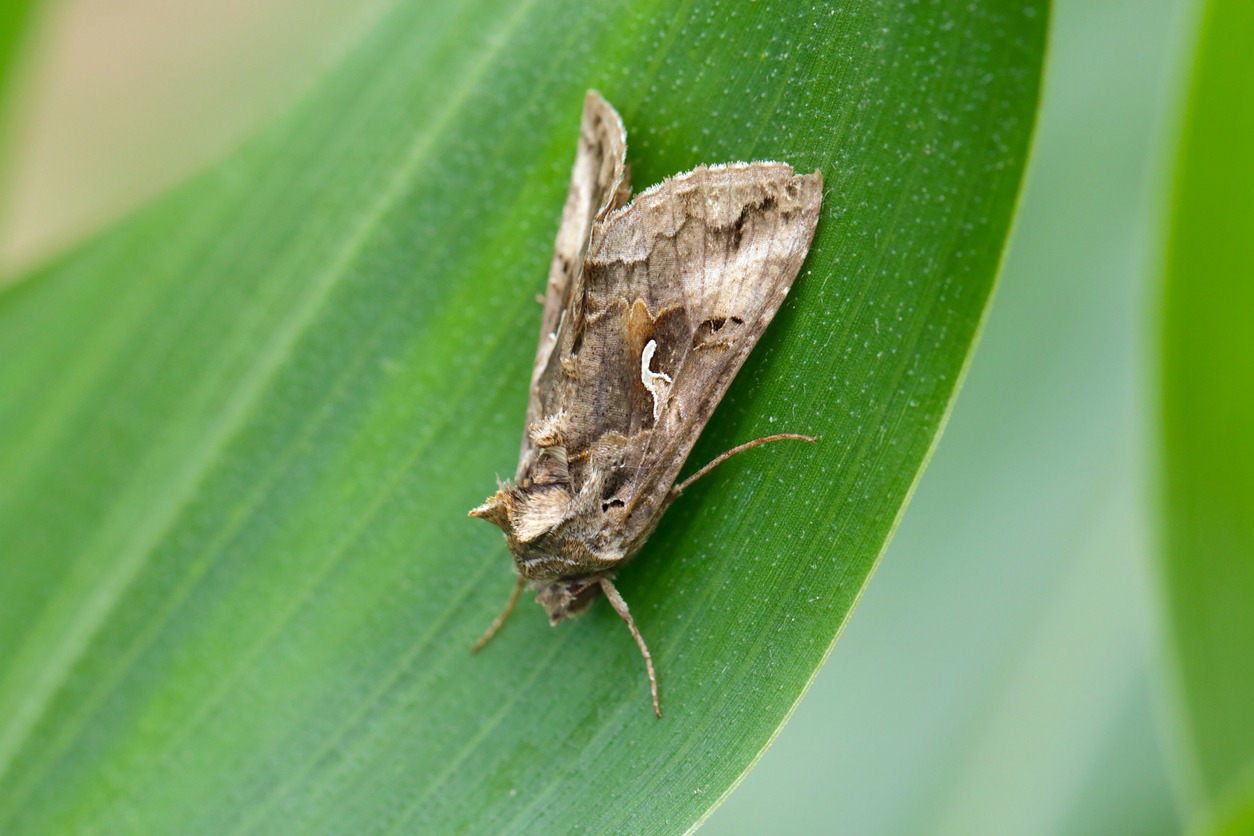
Anyone who works in the vineyard knows that the grapevine moth is difficult to spot before it causes damage . The adult flies at dusk, is small and perfectly camouflaged on the bark : its forewings have a marbled pattern of grayish , ochre, and brown that makes it almost invisible on the shoots. The direct observation window is narrow. During sampling, the focus is mainly on the eggs and larvae . The eggs are flattened, almost translucent, laid singly on the flower buds or rachis. The “black head” stage , when the cephalic capsule of the developing larva becomes visible through the chorion , is the most useful time for counting: the eye adjusts quickly, but it requires attention and good light.
The newborn larva , on the other hand, is practically colorless with a dark head , and quickly penetrates the grape before it can be easily detected. In later stages, it becomes greenish or yellowish , with a brown head and thoracic plate.
Not to be confused with the grapevine moth ( Eupoecilia ambiguella ): the adult has yellow wings with a dark transverse median band, very different from the marbled pattern of the grapevine moth. It produces only two generations per year, rarely three , and is more common in northern areas and at higher altitudes . In practice, where the two species coexist, treatments coincide because their biological cycles overlap.
Geographical distribution and host plants
Lobesia botrana is widespread throughout the Mediterranean basin , in the Balkans , in some areas of North Africa , the Middle East and Japan . In Italy it is present throughout the national territory , with greater economic importance in the central and southern regions.
Although it is essentially polyphagous , capable of developing at the expense of over 27 plant families , the grapevine is its main host plant. Among the spontaneous plants is Daphne gnidium , believed to be the original host plant of the species. It can also attack olive trees , currants and various plants of the Mediterranean environment including Rosmarinus , Clematis , Lonicera and Viburnum .
In Emilia-Romagna, the economically significant damage is concentrated in the Ravenna plains and the Lambrusco area between Modena and Reggio Emilia. Infestations are strongly influenced by the microenvironment and seasonal climate conditions, with considerable fluctuations not only from year to year but also from generation to generation.
Life cycle: the three generations of Lobesia botrana
In the main Italian wine-growing areas, L. botrana normally produces three generations per year . In the north, in cool years, this number can be reduced to two. In the south , where summer temperatures favor accelerated development, a partial fourth generation has been documented.
Wintering
The insect spends the winter in the diapausing chrysalis stage , hidden in a silken cocoon under the rhytidome of the stump, between cracks in support posts, or in the soil. The main factors of natural mortality during overwintering:
- Temperatures below -7°C for several days are lethal for a significant portion of pupae.
- High relative humidity favors attacks by entomophagous fungi.
- The hymenopteran parasitoid Didrachys affinis regularly attacks overwintering pupae.
First flight (anthophagous generation) – April/May
The first emergence occurs when air temperatures exceed 10°C for 10–12 consecutive days . Adults are active at temperatures above 12°C, with optimal conditions between 20°C and 30°C and relative humidity of 40–70%. The average adult lifespan in the field is 8–10 days.
Fertilized females lay eggs on flower buds, and the larvae eat away at the flowers and clusters, forming the characteristic silky clusters. Each larva destroys an average of 6-8 flower buds. Pupae development occurs within the clusters themselves.
At this stage , economic damage is generally limited : the bunch compensates with increased fruit set. For this reason, integrated production regulations prohibit treatments against the first generation.
Second flight (carpophagous generation) – June/July
The second flight occurs from late June to mid-July . The larvae attack the swollen grapes, making penetration holes and partially emptying them. Each larva damages an average of 5-7 grapes.
This is the generation on which it is imperative to target defenses . Mechanical damage opens entry points for Botrytis cinerea and sour rot agents, triggering a cascade effect that can compromise entire bunches.
Third flight (carp-eating generation) – August/September
The third flight occurs between August and mid-September , with the larvae developing on the ripening grapes. During this phase, each larva damages 10-20 grapes, and the increasing sugar content promotes faster larval development and significantly higher female fecundity.
| Generation | Period (Northern Italy) | Larval target | Economic relevance | |
| First (anthophagous) | April – May | Flower buttons and flowers | Generally low | |
| Second (carpophagous) | June – July | Swelling grapes | High – key generation | |
| Third (carpophagous) | August – September | Ripening grapes | Very high – more harmful | |
Embryonic and larval development: the influence of temperature
The speed of development of eggs and larvae is strictly dependent on temperature , a fundamental parameter for calibrating forecast models.
Average egg development time (days) as a function of temperature:
| 13 °C | 18°C | 23 °C | 26 °C | 28°C | 31°C | 34 °C |
| 18,3 | 9,1 | 5,3 | 4,1 | 4,0 | 3,9 | 4,6 |
Average duration of complete larval development (days) as a function of temperature:
| 14 °C | 18°C | 23 °C | 25 °C | 28°C | 30°C | 33 °C |
| 61,1 | 32,2 | 23,8 | 17,3 | 16,2 | 15,0 | 15,9 |
The moth-botrytis link: an interaction that amplifies the damage
One of the least discussed aspects in field practice is the biological synergy between L. botrana and Botrytis cinerea . Experimental studies have compared larval development on a diet containing botrytis mycelium to a diet free of the fungus (data: Emilia-Romagna Phytosanitary Service):
| Condition | Larval development (days) | Mortality (%) | Eggs / female | Viable eggs |
| Standard diet | 34.4 | 23% | 54 | ~91% |
| Diet with Botrytis | 25.0 | 13.5% | 106 | ~93% |
The fungus not only doesn’t hinder the larvae: it nourishes them better . Larvae grown on botrytis mycelium develop more rapidly, have almost half the mortality rate, and double the fertility rate . Consequently, a vineyard already affected by botrytis is also a more favorable environment for the development of the moth, with an amplifying effect that must be taken into account when planning defense.
Monitoring: pheromone traps, forecasting model, and visual sampling
A timely and calibrated intervention requires a monitoring system structured on three levels .
1. Sexual pheromone traps
Pheromone traps capture adult males and provide information on flight dynamics. Main operating instructions:
- Install 1-2 traps per hectare in early April.
- Check every 3-4 days to detect significant onset of catches.
- Replace the hormone capsule approximately 10 days before the next generation is expected to begin flying.
- First-generation catches are indicative of population pressure , but do not justify treatment.
To consider the start of the captures statistically significant , a progressive increase in the number of males captured must be recorded in two subsequent checks spaced 3-4 days apart .
2. MRV-Lobesia forecasting model
The MRV-Lobesia forecasting model calculates the cumulative flight rate and estimates the optimal timing of intervention based on local temperature data. Provincial phytosanitary bulletins integrate the model’s forecasts with actual capture data from local traps .
Key time windows from the start of captures (second generation):
- From the start of significant catches to the start of egg-laying : 5-8 days.
- From egg-laying to larval hatching : 4-6 days.
- Optimal intervention window : between the 5th and 14th day from the start of captures, depending on the mechanism of action of the chosen product and the phenological stage of the generation.
3. Visual sampling
Visual monitoring of clusters complements traps. It should be conducted on a representative sample per plot and allows for:
- Check for the presence of eggs (in the “blackhead” stage they are easily recognizable).
- Count the penetration holes and estimate the percentage of infested bunches.
- Validate model predictions with real plot-level data.
Intervention thresholds in integrated production specifications
| Generation | Type of vineyard | Intervention threshold |
| Before | Everyone | Treatments not permitted |
| Second | Usually infested | Presence of eggs or penetration holes |
| Second | Not usually infested | 5% bunches with eggs and/or larvae or holes |
| Third | Everyone | 5% of infested bunches |
Defense strategies: products and timing of intervention
The choice of the active ingredient must be made based on the mechanism of action, the phenological stage of generation and the possible use in organic farming.
Products with ovicidal or ovo-larvicidal action (to be applied before the eggs hatch)
- Tebufenozide (MAC, ecdysone mimetic): Recommended only for second-generation females, it works by inducing a lethal early molt. It should be applied before the eggs hatch.
- Methoxyfenozide (MAC): same family as tebufenozide, similar use.
- Chlorantraniliprole (diamides): ovo-larvicidal properties, maximum 1 application per year. Also active against striped moth ( Cryptoblabes gnidiella ) and Eulia.
- Emamectin (avermectin): ovo-larvicide, to be applied to “black-headed” eggs. Not permitted in organic farming.
- IGR: teflubenzuron, lufenuron, flufenoxuron : chitin synthesis inhibitors, to be distributed during egg-laying.
Products with larvicidal action (to be applied at the birth of the larvae, before they penetrate the grapes)
- Spinosad (spinosine): permitted in organic farming, maximum 3 treatments/year alternating with spinetoram.
- Bacillus thuringiensis kurstaki (Btk): microbiological, permitted in organic farming, no residues on the berries. Excellent for the third generation. Repeat every 7-10 days in case of heavy rainfall.
- Indoxacarb (oxadiazine): broad-spectrum larvicide.
| Product | Category | Target | Biological | Max interventions/year |
| Tebufenozide | MAC | Newborn eggs/larvae | No | See specifications |
| Methoxyfenozide | MAC | Newborn eggs/larvae | No | See specifications |
| Chlorantraniliprole | Diamides | Eggs/larvae | No | 1 |
| Emamectin | Avermectins | Eggs/larvae | No | See specifications |
| Teflubenzuron / lufenuron | IGR | Newborn eggs/larvae | No | See specifications |
| Spinosad | Spinosine | Larvae | Yes | 3 (alt. spinetoram) |
| Bacillus thuringiensis | Biological | Larvae | Yes | No limits |
| Indoxacarb | Oxadiazine | Larvae | No | See specifications |
Sexual confusion: the most selective method
The mating disruption technique , based on saturating the environment with synthetic sex pheromone, prevents males from locating females , drastically reducing mating and thus the laying of fertile eggs. It leaves no residue on the grapes and is the most respectful method of natural enemies.
To be effective it requires:
- Minimum areas of 5-10 hectares in block (smaller areas reduce effectiveness due to the so-called “edge effect”).
- Installation of the speakers in late March/early April , before the first flight.
- Monitoring with control traps to verify the effectiveness of pheromone saturation.
In vineyards in integrated or organic production, especially in prestigious denominations, mating confusion today represents a reference standard , often encouraged by regional agro-environmental measures.
Natural Enemies: A Heritage to Be Preserved
The community of natural antagonists of L. botrana is rich and includes:
- Parasitoid Hymenoptera : Ichneumonids, Braconids, Chalcidids (larval and pupal parasitoids).
- Diptera Tachinidae (larval parasitoids).
- Entomophagous fungi .
- Cytoplasmic polyhedrosis virus and microsporidia .
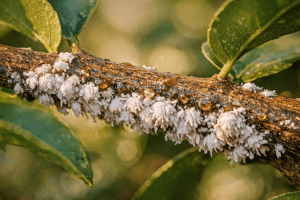
The parasitoid Didrachys affinis has been documented as a control agent for overwintering pupae. The use of broad-spectrum insecticides on the first generation eliminates these antagonists just when they are on the inflorescences, favoring outbreaks of the cottony mealybug ( Planococcus citri ) and reducing natural control on subsequent generations. This is the most convincing technical reason, in addition to the limited direct economic significance, for the ban on treatment on the first generation.
FAQ – Frequently Asked Questions about Grapevine Moth
1. Are pheromone traps sufficient to calibrate the treatment?
Traps capture adult males and provide information on flight dynamics, but they do not allow for a direct estimate of larval pressure on the clusters . They must be supplemented with visual sampling of eggs and, where available, with predictions from the MRV-Lobesia model . Used alone, without an analysis of the percentage of infested clusters, they may lead to unnecessary or untimely treatments.
2. Why shouldn’t we deal with the first generation?
For two complementary reasons. First, damage to flower buds rarely exceeds the economic damage threshold because the cluster compensates with increased fruit set. Second, the hymenopteran parasitoids present on the inflorescences during that period are the main natural biological control agents . Treatment eliminates them , reducing the containment of subsequent generations and encouraging outbreaks of secondary pests such as the mealybug.
3. What products can be used organically against the moth?
The active ingredients permitted in organic farming are Bacillus thuringiensis kurstaki ( Btk ) and Spinosad . Btk is the preferred choice for the third generation because it leaves no residue and has a wide safety margin before harvest. Spinosad is effective on early-stage larvae but requires attention to the maximum number of applications per year and should preferably be applied in the evening to reduce contact with pollinators.
The grapevine moth hits plants already under stress hardest. A vine with balanced water and nutrition responds better and limits indirect damage. Plantvoice continuously monitors the plant’s physiological status before stress becomes visible.